
AI for SMEs: Getting started, tools and practical examples for small and medium-sized enterprises

The use of artificial intelligence offers a wide range of options without the need for your own IT department. Small and medium-sized companies can benefit from the technology, often with manageable effort and budget. AI helps to make processes more efficient, identify and solve problems faster, and make better use of resources. In this way, SMEs can increase their competitiveness and successfully assert themselves in the market.
Nevertheless, reality shows a different picture: According to the latest study by Federal Statistical Office in 2024, only one in six small companies with 10 to 49 employees used AI technologies. For large companies, it was almost every second.
This article shows how to use AI successfully in SMEs, which tools are suitable to get started and where integration is particularly worthwhile.
Why artificial intelligence is particularly interesting for SMEs
The classic challenges of small companies are well known: too little time, too few staff, too little budget. This is exactly where AI can start. It automates repetitive tasks, relieves employees of routine tasks and enables better decision-making based on data.
SMEs even have advantages over large corporations. They are more flexible, can make decisions faster and test new technologies without lengthy coordination processes.
The barriers to entry are so low. Cloud-based AI solutions are already available at very favourable conditions. Many tools, such as ChatGPT, DeepL or Canva, offer free basic versions. And for specialized AI applications, there are open-source alternatives that require basic technical understanding but offer maximum flexibility at minimal costs.
Where AI applications make the most difference in small businesses
The biggest levers lie where repetitive, data-based tasks occur and where errors or inefficiencies have so far cost time and money. The following areas offer particularly great potential for integration. These fields of application play a central role, particularly in the digitization of SMEs.
Texts and communication
The most obvious start for many SMEs: AI-based copywriting. Whether it's product descriptions, social media posts, newsletters or offers, generative AI such as ChatGPT, Gemini or Claude can provide initial drafts that then just need to be adapted. A small tax consulting office can have standard answers to frequently asked questions prepared. A craft business can create offer texts more quickly. A retailer can optimize its product texts for the online shop.
Important: Artificial intelligence does not replace expertise, it accelerates implementation. The final testing and adjustment remains with humans.
Customer service and customer communication
Chatbots and virtual assistants can answer standard inquiries around the clock without the need for an employee to be available. This is particularly valuable for SMEs with small teams. Customer service is becoming more professional without the need to hire additional staff.
Modern chatbot solutions can often be set up without programming knowledge. They answer common questions about opening hours, delivery status or product availability and forward more complex concerns to human employees. This measurably improves customer satisfaction.
Accounting and administration
Artificial intelligence can automatically record, categorize and transfer documents to accounting. It can check invoices, monitor incoming payments and warn if there are discrepancies. For small companies, where one person often performs several tasks at the same time, this automation is a significant relief.
Tools such as DATEV with AI functions or specialized solutions for small companies automate routine tasks and reduce errors when entering data manually. Optimizing these business processes saves time for the really important work and enables efficiency to be increased in all areas.
marketing and sales
AI-based analysis of customer data enables personalized marketing campaigns even without a large budget. Instead of sending the same email to all customers, SMEs can segment their target groups and deliver suitable, personalized offers.
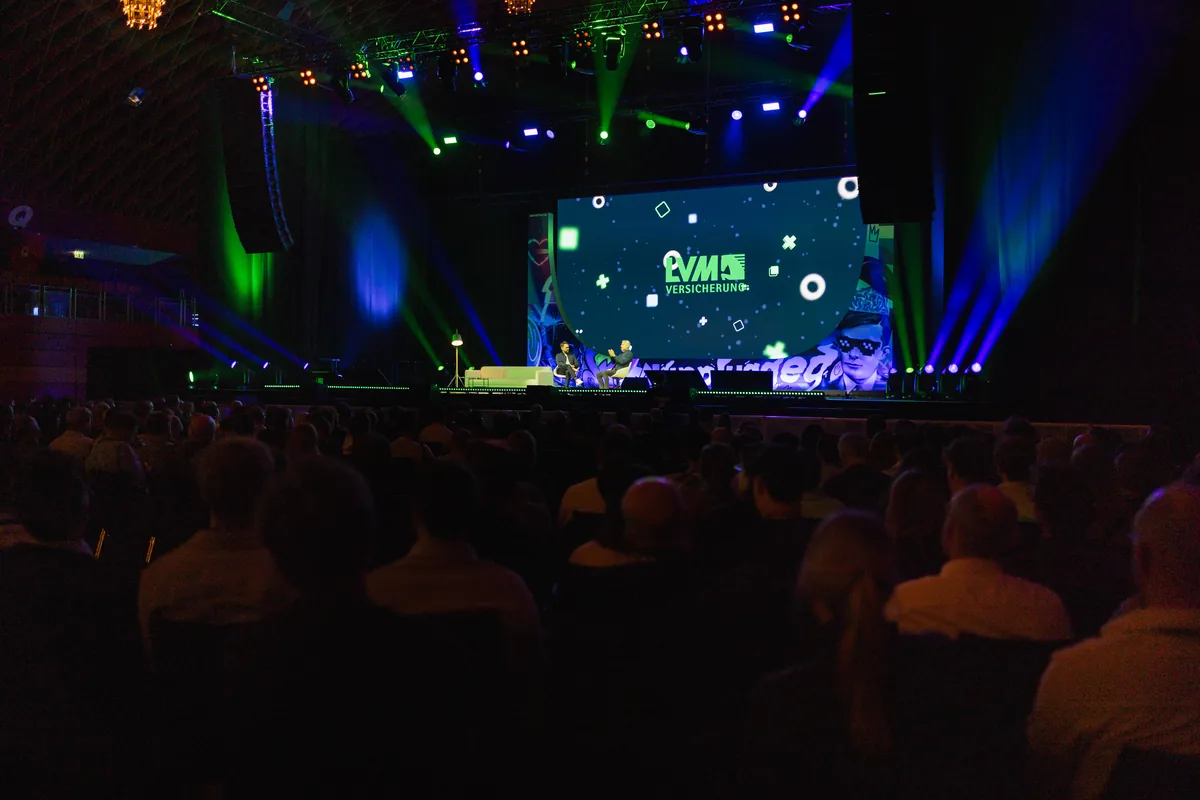
Practitioners will be showing how SMEs achieve such success in practice at d:u27 on 13 & 14 April 2027 in Münster.
. There, companies from various industries report on their experiences with AI in marketing, sales or other areas of business.
Warehousing, production and logistics
Particularly relevant for retailers and manufacturing companies: AI can generate demand forecasts, optimize inventories and suggest ordering times. This reduces both overstocks and supply bottlenecks. In production and logistics, artificial intelligence also enables predictive maintenance and more efficient processes.
These tools and AI solutions are good to get you started
For SMEs that want to start with artificial intelligence, ready-made solutions that do not require their own development are particularly suitable.
For texts and content, there is ChatGPT, Gemini, Claude, Grok, Llama or Jasper. These tools understand natural language and create texts of all types, from emails to blog posts to product descriptions. The basic versions are often free of charge, and advanced functions cost between 20 and 50 euros per month.
DeepL has established itself as the standard for translations. AI-based translation is significantly better than traditional machine translation and takes context and nuances into account. An indispensable tool, particularly for internationally active SMEs.
For image editing and design, tools such as Canva with AI functions, Flux, DALL-E 3, Stable Diffusion, Adobe Firefly, Leonardo AI or Midjourney offer new opportunities. Marketing materials, social media graphics or product visualizations can thus be created even with little design knowledge.
For meetings and documentation, there are tools such as Fireflies.ai, Fathom or Meeting.ai, transcribe and summarize conversations, and create task lists. A practical help, especially for small teams that do not have time for detailed protocols.
For the Microsoft world, Copilot has also become more important for SMEs. It integrates AI features directly into Word, Excel, Outlook, and other Microsoft 365 applications, from automatic email summarization to data analysis in Excel.
How to get started: Five practical tips for using AI
Start small, learn fast
The biggest mistake is planning too long. Instead of a company-wide AI concept, a specific, manageable use case is recommended. It can be as simple as: “We're using ChatGPT for the first version of our offer emails.” It is important to start and gain experience.
Rely on ready-made AI solutions
There are already ready-made tools for the vast majority of SME use cases. Open source solutions or cloud-based services make it possible to get started without large initial investments.
Involve employees
Artificial intelligence only works if people use it. This means early communication, taking fears seriously, offering workshops and training courses. Employees who understand how AI relieves them become technology ambassadors.
At our events, companies will be showing how they have successfully prepared their teams for the use of AI. In addition, tools and use cases are presented in master classes. The formats are practical and provide concrete methods for building competencies.
Measure success
How much time does the new tool actually save? How has the error rate changed? Only those who measure success can assess whether the investment is worthwhile and where there is potential for optimization.
Don't want everything at once
AI won't change everyday work overnight. Digital transformation is a process. Anyone who takes on the next one after the first successful project and gradually builds up AI expertise is more successful in the long term than anyone who wants everything at once.
Use support and funding opportunities
Many SMEs are unaware that there are numerous support offers for the use of AI.
Mittelstand digital centers of the Federal Ministry of Economics and Climate Protection offer advice, workshops and training courses. They help identify use cases, assist with implementation and provide practical know-how to qualify employees.
Funding programs can make it easier to get started. From digital bonus programs in the federal states to specific AI funding programs from the federal government, there are various ways to financially support investments in artificial intelligence. The local Chamber of Commerce or Chamber of Crafts provide good guidance, they know the relevant programs and can provide targeted advice.
Universities and research institutions offer cooperation. Feasibility studies, pilot projects or advice on specific AI applications: The academic world can be a valuable partner, especially for SMEs without their own research department.
Where artificial intelligence reaches its limits
Despite the many benefits of AI, it is important to know its limits in order to make optimal use of it. AI is a powerful tool that effectively supports and relieves people. It complements human skill, but does not completely replace it. For example, AI cannot:
- Make strategic decisions independently
- Build personal customer relationships
- Completely replace expertise
Especially with generative AI such as ChatGPT, it is important to carefully review the results. AI often provides very convincing answers, but human expertise remains essential, particularly when it comes to sensitive topics such as law, medicine or finance.
Conscious use of data protection is also crucial. Personal data or trade secrets should be entered into cloud-based AI tools with care. Clear guidelines and a good awareness of how to handle data securely ensure that AI is used responsibly and effectively.
Conclusion: Now is the right time for AI in SMEs
Using AI in SMEs is a real opportunity. The technology is sophisticated, barriers to entry are low, and competition won't wait. Anyone who starts to gain experience today, even with small projects, builds up expertise that makes the difference tomorrow.
The key isn't in the perfect strategy, but in getting started. A manageable pilot project, a ready-made AI solution, a specific use case: That's enough to get you started. The rest comes from experience and continuous learning.
Starting small with AI and learning fast — that's exactly the conversation at the d:u27 Festival on 13 & 14 April 2027 in Münster. Six stages, 350+ speakers, 80+ masterclasses and over 250 exhibitors, covering AI use cases in the enterprise, AI in the SME and pragmatic adoption with off-the-shelf tools — with managing directors and AI leads from SMEs who've already worked through the rough patches. Get your ticket for d:u27 now!
More blogs



for the d:u27!