
MCP makes it possible: Why the Model Context Protocol is the basis for the Agentic Web
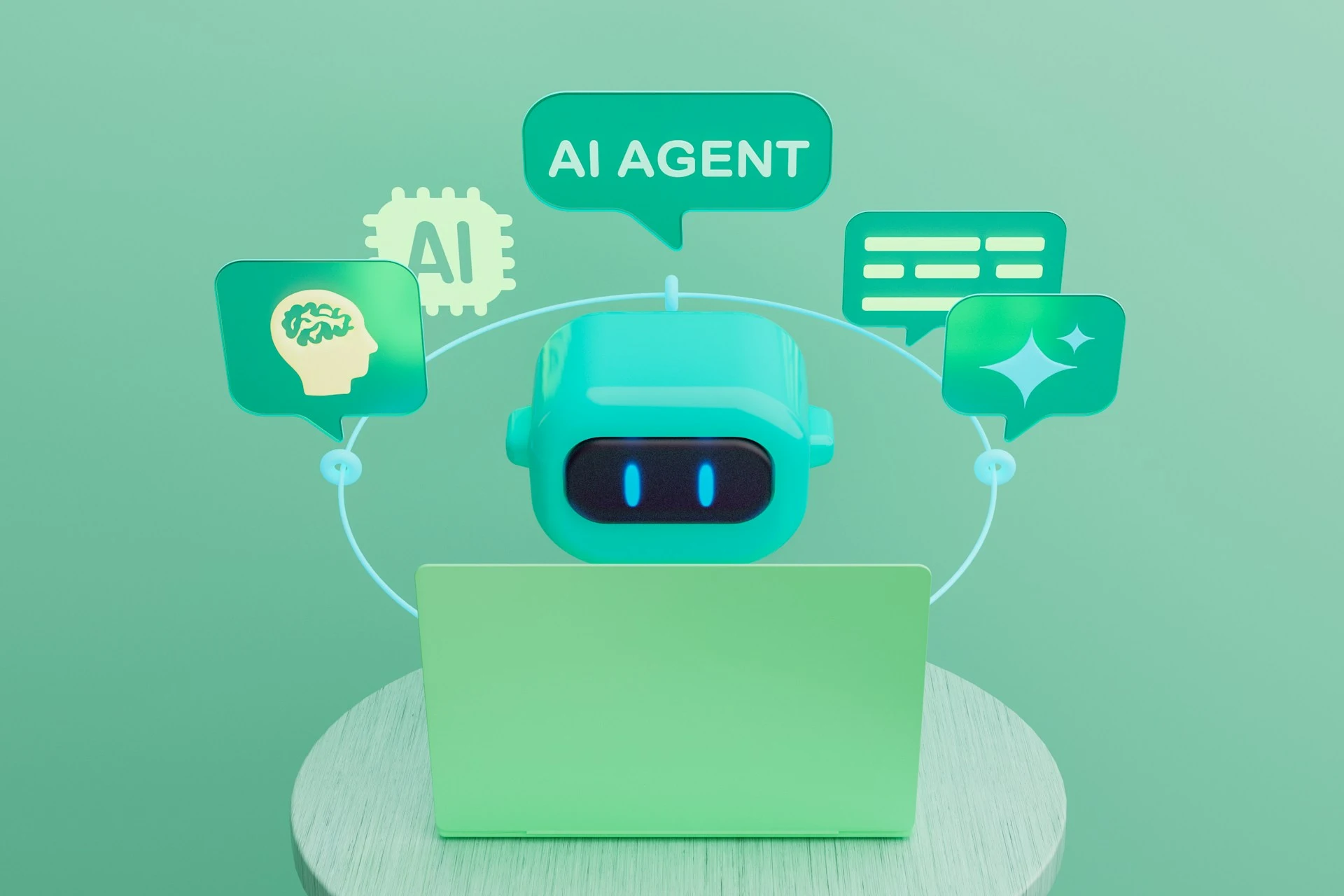
An AI agent who finds the right hot air fryer — tailored to household size and eating habits. It researches, compares and orders automatically, without manually clicking through e-commerce pages. The Model Context Protocol, MCP for short, is the standard that makes this possible.
In our podcast episode #201 Bernard talks with Ulf Loetschert and Dr. Ulrich Wolfgang from LoyJoy about why MCP will shape the future — and what that means for companies and developers in concrete terms.
What is the Model Context Protocol?
The Model Context Protocol is an open protocol that defines how AI applications can communicate with external systems. It was developed by Anthropic and enables AI not only to generate texts, but also to access data sources and trigger actions in other systems.
A helpful analogy is the USB plug: Just as USB connects various devices with a uniform standard, MCP makes it possible to connect business systems to AI applications. Without such a standard, each AI would have to be individually connected to each system — a development project for every combination.
The three components of MCP
The Model Context Protocol consists of three central components:
- Tools: Executable functions that the AI can call up — such as “send email,” “create data set,” or “cancel order.”
- Resources: Access to data sources such as files, databases, or APIs — the AI can retrieve information without anyone having to copy.
- Prompts: Ready-made instructions that are stored in the MCP server — such as templates for specific tasks or sets of rules.
How MCP works technically
Technically, MCP consists of two components: the MCP server and the MCP client. The MCP server provides the functions — it sits in front of the CRM, ERP system or knowledge database and makes them accessible to AI. The MCP client is the AI application that uses these features.
A specific example: A customer asks an online shop's AI assistant: “Where is my order?” The AI agent recognizes the request, retrieves the order status from the ERP system via MCP and responds with the latest shipping information — without the need for human intervention.
Dr. Ulrich Wolfgang reports in the podcast that he implemented the protocol himself — and was ready after a day and a half. The reason: MCP is based on JSON-RPC, an established standard. The technical hurdle is therefore low.
The problem that MCP solves
Many companies today use ChatGPT, Copilot, or similar tools. But what happens when the AI is actually supposed to do something? It is then copied and pasted. The AI generates a text, the human copies it into CRM. The AI creates a product description, and humans transfer it to the PIM system.
Dr. Ulrich Wolfgang sums it up in a nutshell in the podcast: Copy-paste is the bottleneck. AI is disconnected from existing systems — it can read and write, but cannot act. In the last two years, companies have primarily talked about RAG pipelines, i.e. retrieval augmented generation: extracting knowledge from documents and making it available in AI. It's useful, but it's just about getting information. The next step — triggering actions — has not yet been possible in a standardized way. MCP fills exactly this gap.
How MCP became the standard
The development of MCP can be divided into three phases. In the first phase, everything ran locally: Developers connected their AI to local systems via standard I/O, which was useful for experimentation, but not suitable for business.
The second phase brought remote capability via server-sent events (SSE), an HTTP-based protocol for bidirectional communication. This allowed the AI to work asynchronously. However, SSE was difficult to deploy in cloud environments.
The third phase — Streamable HTTP — significantly simplified deployment and made MCP enterprise-ready. And just at that point, something remarkable happened: Microsoft, Google, and Anthropic announced their support for MCP within a week. Microsoft announced that it would make Windows computers controllable via MCP. Google integrated MCP with Gemini. Anthropic made it possible to enter MCP servers directly into Claude.
Dr. Ulrich Wolfgang describes this simultaneity in the podcast as no coincidence, but as a coordinated approach. The major AI providers have agreed on a standard — meaning that MCP is no longer just an interesting protocol from the developer community, but the basis for connecting AI with business systems.
The Agentic Web: When AI Agents Communicate with AI Agents
When AI systems can communicate with business software via MCP, something new is created: the Agentic Web. In this world, customers no longer send inquiries themselves, but their personal AI agents. The shopping agent contacts the company's sales agent, who in turn contacts the logistics agent.
Google has already proposed its own protocol for this: agent-to-agent (A2A). It is based on the same technical principles as MCP (JSON-RPC), but defines how AI agents can share tasks with each other. An agent can hand over a work order to another agent, which is then processed independently.
The development is being driven by two sides: Consumers are getting used to AI assistants and expect them to be able to act. And in the software industry, the question of MCP ability is becoming a selection criterion. Ulf Loetschert puts it this way: The question of whether a system is MCP-compatible or not will play an important role in the future — whether you want to or not.
Companies that do not provide an agent at the customer interface face a dilemma: They are either overwhelmed by agent requests that they have to process manually — or they are left behind because competitors already offer agent-to-agent communication.
What this means for developers
Many developers are watching this development with mixed feelings. Tools such as cursors show how much AI can already take over. The question of your own job profile is obvious.
But Dr. Ulrich Wolfgang sees this primarily as an opportunity. MCP provides a modular kit for applying AI to industry-specific problems. The fields of application are diverse: The podcast cites the example of customs tarification, where complex legal regulations are interpreted using AI. Similar patterns can be found in medical benefit billing, legal documents, or wherever expertise meets structured processes.
The data:unplugged 2027 festival offers an exchange with developers and tech decision makers on exactly such future topics. From AI strategies to practical implementations — this is where you'll meet the right interlocutors.
Experts in these industries often do not even know that such solutions exist. You don't have time to develop yourself in everyday work. Anyone who follows this approach can achieve a product market fit — without a large investment and with the opportunity to work profitably directly.
Conclusion: The right time to act
The Agentic Web is evolving — and the Model Context Protocol is the standard that makes it possible. For companies, the question is: How do we remain relevant when customers no longer interact with us directly but send their AI agents? Developers have the opportunity to build industry-specific solutions and thus meet real needs.
In the podcast, Ulf Loetschert sums it up as follows: Anyone who doesn't deal with the topic now has a great risk of becoming irrelevant. The technology is there, the standard is set, and the adaptation is just beginning.
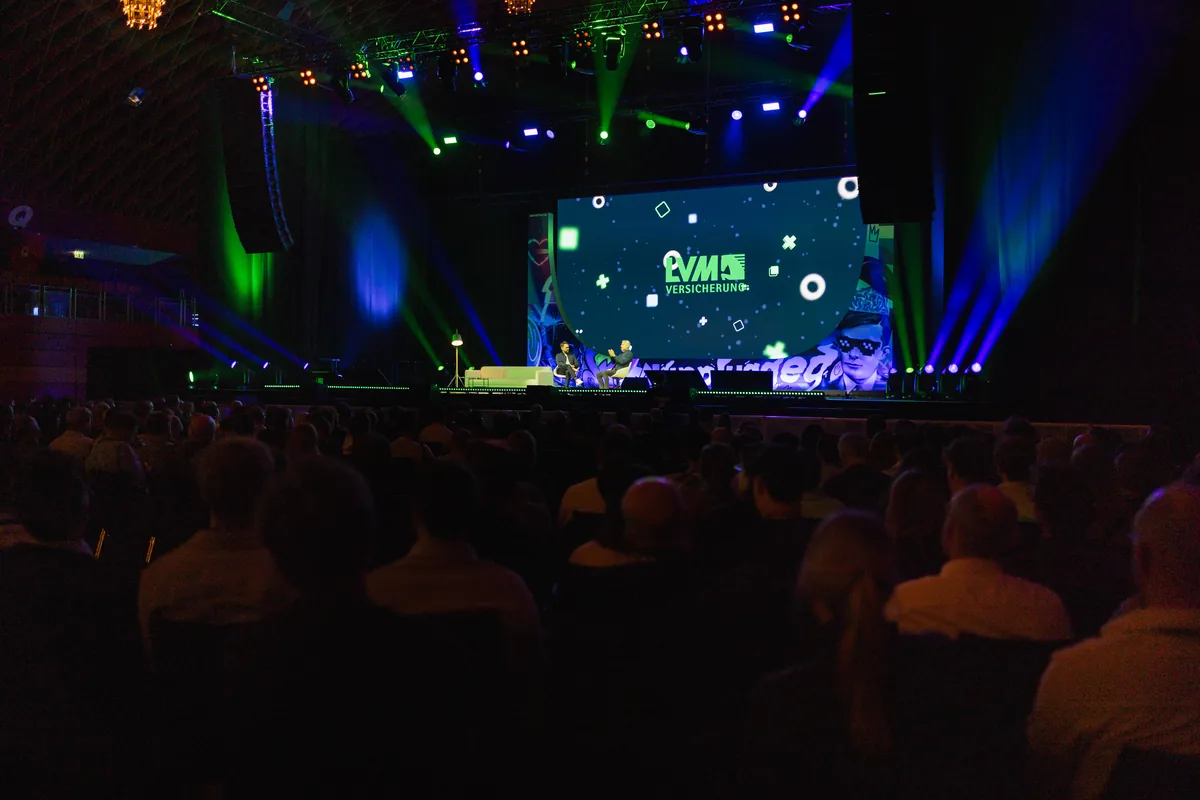
You can find out how other medium-sized companies are preparing for the Agentic Web on the data:unplugged 2027 festival on April 13 & 14 in Münster. At the SME Stage and four other stages, decision makers share their specific experiences — practical and well-founded. You can also exchange ideas about provider companies such as LoyJoy in the Expo area and discuss solutions for your company.
For effective implementation, it is recommended to involve key people in your company, train them and engage in exchange with key opinion leaders. Secure your ticket for yourself and your core team now.
More blogs



for the d:u27!