
AI in sales: real-world practice at d:u27
At d:u27 on 13 & 14 April 2027 in Münster, the new SME AI Village brings together a stage, masterclasses and round tables for SMEs.

Which types of AI are changing sales
When talking about artificial intelligence in sales, it's worth taking a look at the different types of AI that are used today. The two most important: predictive AI and generative AI. Both offer sales teams different benefits — depending on which processes are to be optimized.
Predictive AI: Identify patterns and make predictions
Predictive AI systems analyze historical data and recognize patterns to make predictions. In the sales process, this means: Which customers have the highest probability of closing? Where does a deal threaten to fall apart? Such AI technologies work in the background and provide the sales team with data-based recommendations for the next phase of the sales cycle.
Generative AI: Speed up communication
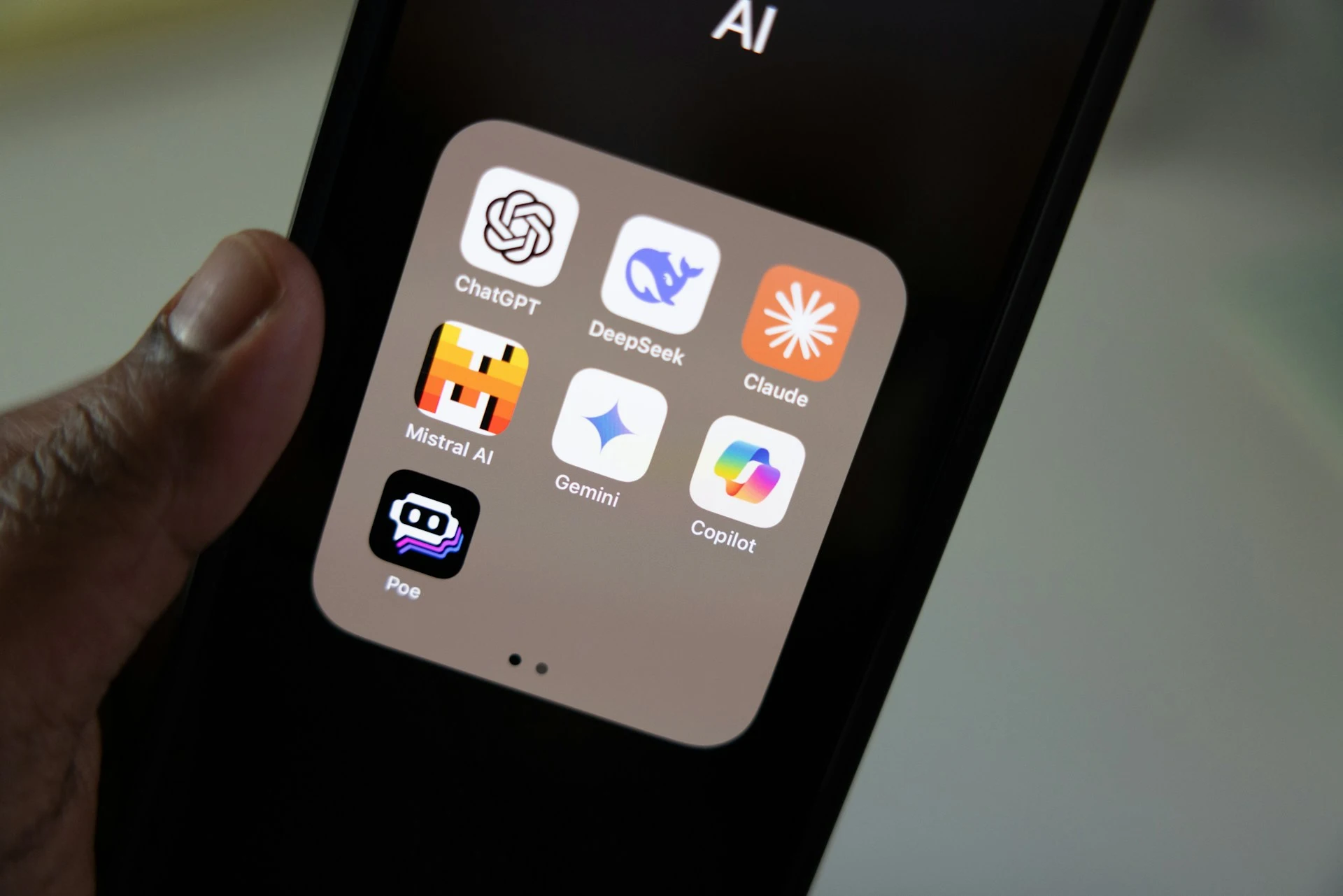
Generative AI tools like ChatGPT are changing sales on another side. They help you create emails, personalize customer communications or automatically generate summaries and follow-up suggestions from call notes. In day-to-day business, this saves time on tasks that were previously completed manually — from researching and creating content to address customers to preparing for appointments.
How both types of AI work together
Both types of AI complement each other. Predictive AI says where the sales team should look. Generative AI increases efficiency in daily communication at key customer interfaces. Integrating both approaches into existing processes does not change the business model, but the way teams process leads, prepare conversations, and serve customers.
Applications: Where AI starts in the sales process
AI tools are now widely used in sales. Many sales organizations are already using them for lead generation and qualification, sales forecasting, contacting customers or creating emails. At the same time, sales teams report that AI allows them to better understand their customers.
The three central fields of application
In essence, the use of artificial intelligence in the sales process can be broken down to three areas:
- Lead qualification and prioritization: Automated scoring based on behavioral data instead of static rules
- Sales forecasting: Data-based forecasts instead of subjective estimates
- Customer service and inventory maintenance: Early signals of migration risks, more targeted cross-selling
All three relate to processes that are often still heavily manually controlled in SMEs — and in all three areas, there are measurable benefits from the use of AI.
Lead generation and scoring: finding the right customers
Every sales team is familiar with the problem: There are many leads in the pipeline, but too little time to process them all equally intensively. Traditional lead scoring is usually based on fixed rules — if someone has downloaded a white paper, points are awarded. If the person works in a specific industry, there are additional points. These rules are static and do not reflect the actual willingness to buy.
How AI-powered lead scoring works
AI-supported lead scoring takes a different approach. Algorithms analyze historical sales data and recognize patterns that people often miss out on. What combination of company size, industry, page visits and interactions actually led to sales in the past? The result is a dynamic score that is constantly adjusted — not based on assumptions, but on actual behavior throughout the sales cycle. This allows teams to recognize significantly faster which leads are ready to buy.
This is particularly relevant for SMEs because sales teams are often smaller here. When three sales representatives have to process over 200 leads, it makes a significant difference whether they prioritize based on experience or identify where the probability of closing is highest based on data.
Sales forecasting: From estimation to data-based forecasting
Sales forecasts are among the most important management tools in a company. Nevertheless, in many companies, they are based on the experience and assessments of sales managers — with corresponding vagueness.
What AI-powered forecasting does
AI solutions for forecasting start right here: Instead of relying on subjective estimates, algorithms analyze historical sales data, current pipeline signals, and external factors. According to one McKinsey analysis AI-supported forecasting reduces forecasting errors by 20 to 50 percent — an advantage that is directly reflected in more stable margins and better resource planning.
In concrete terms, this means that AI solutions recognize at an early stage which deals are at risk in which phase of the sales cycle. A medium-sized machine manufacturer with 50 open opportunities can identify which ten deals have the highest probability of closing — and which five are dragging on the sale.
For management, this means fewer surprises at the end of the quarter. For sales teams, this means clearer priorities in their day-to-day business. If you want to dive deeper into the basics of data-based decisions, the d:u blog article Data-based decision-making: What it means and how it works in SMEs a practical guide.
Customer care and inventory maintenance: Strengthen relationships with AI
Many sales organizations focus on acquiring new customers. There is considerable potential in existing customer relationships. AI solutions help to systematically tap this potential — at all relevant customer interfaces.
Churn prevention and cross-selling
A typical use case: churn prevention. AI systems analyze behavioral patterns and recognize when customers start withdrawing — for example because order frequencies fall or interactions decline. The sales team receives a signal and can adjust the customer approach in a targeted manner.
Cross-selling based on AI works in a similar way: Instead of offering everyone the same additional product across the board, AI technologies recognize individual patterns. Which customers with a similar profile bought specific products? This makes the approach more relevant and the communication looks less like sales pressure and more like advice.
Strengthen personal relationships through better data
Especially in medium-sized companies, where personal discussions and long-term relationships form the basis of business, it is not a question of replacing them with technology. It is about strengthening them with better information. The integration of AI into existing CRM systems makes exactly that possible: more context before the conversation, better preparation for appointments, more targeted customer contact.
Decision-makers report on how sales teams are setting up AI-supported processes in practice at the d:u27 on April 13 & 14 2027 in Münster. You can find an overview of all speakers here.
What it takes for AI to work in sales
AI technologies are available. Nevertheless, many projects involving artificial intelligence in sales fail. This is rarely due to sales software, but to three recurring challenges.
Data quality as a foundation
No AI solution can compensate for bad data. If entries in the sales software are incomplete, outdated, or inconsistent, even the best AI tools do not provide useful results. Many companies cite poor data quality as an obstacle to AI progress. The first step before any use of AI is therefore an honest inventory of your own sales processes and data.
A well-maintained CRM as a prerequisite
AI in sales needs clean data as a basis. Without a documented contact history, there is no meaningful evaluation. Without pipeline data, there is no reliable forecasting. Before AI tools are introduced, the use of existing sales tools must be anchored in the team.
Create acceptance within the team
Sales staff, who have worked successfully on their own for years, are often skeptical about data-based recommendations. Implementation is successful when AI is communicated as support — not as a substitute. According to the Salesforce report, top performers use AI tools 1.7 times more often than less successful colleagues. This shows that AI does not displace strong sales personalities, but increases sales success.
Anyone looking for a structured approach for implementation will find in the d:u article Introducing AI in companies: How to implement it successfully in SMEs a practice-oriented guide.
How to get started in SMEs
Getting started with AI in sales doesn't have to start with a big transformation project. Especially in SMEs, a pragmatic approach has proven effective — phase by phase.
Step 1: Use Existing CRM Features
A realistic starting point is your own CRM system. Many sales tools, such as HubSpot, Salesforce, or Microsoft Dynamics, offer integrated AI functions without additional apps — such as automated scoring or forecasting dashboards. At the same time, it is worthwhile to use generative AI tools such as ChatGPT specifically for individual tasks: formulate emails, summarize conversation preparations or create suggestions for approaching customers.
Step 2: Identify a specific use case
Not everything at the same time, but an area where action is greatest. Are the forecasts unreliable? Then start there. Is the team spending too much time with unqualified contacts? Then AI-based prioritization is the right start.
Step 3: Measure and communicate results
If the pilot project shows that the completion rate is increasing or that sales processes are being accelerated, acceptance within the team grows. In addition to specialist literature on the subject — there are now well-founded books about artificial intelligence in B2B sales — exchange with practitioners is often the most effective way to develop your own sales strategy with AI.
From tool selection to CRM integration — At d:u27, SMEs share their experiences from real sales projects. Find out why the d:u27 is the right event for you and your team.
Conclusion
Sales are not replaced, but relieved
Artificial intelligence in sales is not a revolution that happens overnight. It is a gradual change that starts where data already exists and decisions have so far been based on assumptions. From lead generation to sales forecasting to customer service — the application options run through the entire sales cycle.
The figures show that many sales organizations worldwide rely on AI tools, teams report shorter sales cycles, more precise forecasts and better customer relationships. At the same time, German SMEs still have some catching up to do when it comes to application — not out of ignorance, but often out of uncertainty as to where the integration of artificial intelligence into existing processes should actually start.
You can find out how other SMEs use AI in sales at data:unplugged festival 2027 on April 13 & 14 in Münster. At the SME Stage, companies share their experiences, and in the master classes it becomes concrete: Which AI tools work in everyday sales? Where are the biggest levers?
AI in sales does not only affect the sales department — from marketing to management to customer service, all areas that work on customer interfaces benefit. data:unplugged stands for practical transfer of knowledge — from which the entire team benefits. Get your ticket now!
FAQ
What is the difference between predictive and generative AI in sales?
Predictive AI analyses historical data, recognises patterns and makes predictions, for example about the probability of closing. Generative AI such as ChatGPT speeds up communication, for instance by drafting emails or summaries. The two complement each other: one shows where the team should look, the other increases efficiency in day-to-day work.
Why is traditional rule-based lead scoring often inaccurate?
Traditional lead scoring awards points according to static rules, for example for downloading a white paper or working in a certain industry. These rules do not reflect actual willingness to buy. AI-supported scoring instead learns from historical sales data which combinations actually led to a sale and adjusts the score continuously.
Does AI in sales replace personal customer relationships?
No. Especially in SMEs, the goal is to strengthen personal relationships with better information, for example more context before a conversation. Adoption works when AI is communicated as support, not as a substitute. According to a Salesforce report, top performers use AI tools 1.7 times more often than less successful colleagues.
Do SMEs need new software to start using AI in sales?
Not necessarily. Many CRM systems such as HubSpot, Salesforce or Microsoft Dynamics already offer integrated AI functions, such as automated scoring or forecasting dashboards. The prerequisite is a well-maintained CRM with clean data, because no AI solution can compensate for bad data.