
Which data & AI skills the job market wants
The DAISY Report 2026 by nejo and data:unplugged analyses 324,445 job ads and shows which data and AI skills are in demand.
Where AI in HR actually lands today
The debate around AI in HR is often narrowed down to recruiting. In reality, the spectrum is much broader — from inbound applications and onboarding to talent management and employee retention. What matters less is the technology itself than the question of where it brings measurable benefit.
A clear pattern is emerging. Wherever HR processes are repetitive, text-heavy or data-driven, AI tools deliver real relief. Wherever judgement and relationship work are involved, AI remains an assistant — not a decision-maker. That holds true regardless of industry, company size or HR maturity.
HR is just one of many areas where AI is becoming productive. Similar dynamics are visible in our coverage of AI in marketing and AI in sales for SMEs — each with its own opportunities and stumbling blocks.
Recruiting: the obvious entry point, the most sensitive zone
The most obvious use case for AI in HR is recruiting. Drafting job ads, deriving requirement profiles from job descriptions, structuring interview guides — tools like ChatGPT handle all of this in minutes. The Randstad ifo Survey confirms it: among HR teams already using AI in recruiting, 70 percent use it when writing job ads. That makes recruiting the most natural entry point for AI in HR.
Things get more critical when it comes to candidate selection. AI tools can match CVs against job requirements, extract skills and pre-sort applicants. That saves time, particularly in industries with a tight talent market. At the same time, this is where the regulatory situation is most sensitive: algorithmic pre-selection decides on people's opportunities.
For specialised roles in the data and AI space, classic recruiting also runs into limits. Data scientists, ML engineers, AI product managers and AI leads are barely reachable through standard channels anymore. For exactly this audience, we built d:u Match, a specialised job board for the DACH region, focused on data and AI talent connected to the d:u community. For SMEs looking to build a data or AI team, this is often a more effective channel than broad-spectrum job ads.
Skill matching and onboarding: the underrated lever
Internal staffing is one of the most overlooked fields in talent management. Many companies simply don't know what skills already sit inside their workforce. AI applications for skill matching use machine learning to compare structured profile data with project or role requirements. That makes internal talent visible — and gives HR tasks like succession planning and internal mobility a solid data foundation.
In onboarding, chatbots are increasingly taking on the role of first point of contact. New employees have a long list of standard questions in their first weeks: about IT access and internal tools, about benefits and leave policies, about workflows and contacts. A well-trained chatbot answers these around the clock and takes load off both the HR department and experienced colleagues. The result: faster orientation for new joiners, noticeably less routine work in HR.
How SMEs put these use cases into practice — and where the step from pilot to production tends to break — is one of the central topics at the d:u27 Festival on 13 & 14 April 2027 in Münster. In over 80 masterclasses, AI leads and data leads share their experience from real projects, including the parts where things got difficult. The formats are deliberately built around exchange and discussion.
People analytics: data-based decisions instead of gut feeling
Behind the buzzword "people analytics" sits the systematic analysis of existing HR data — from attrition and exit reasons to sickness rates and performance indicators, training histories and development paths. AI models trained with machine learning recognise patterns that stay invisible in individual cases: warning signals for attrition risk, or correlations between leadership behaviour and employee retention.
A crucial point: people analytics doesn't replace a leadership conversation. The analysis delivers hypotheses and starting points that need to be tested qualitatively. Anyone who confuses pattern recognition with causality ends up making decisions based on correlations that do more harm than good.
Learning and development: individual paths instead of mandatory training
Arguably the biggest lever sits in learning and development. Generative AI can adapt learning content individually, identify knowledge gaps and propose personalised learning paths. Instead of standardised mandatory training, employees receive recommendations that match their role, their level and their development goals. AI makes development more individual — and more effective.
For SMEs, this is particularly relevant because L&D budgets are tighter than in large corporations. AI helps deploy available resources more precisely and supports the transfer into day-to-day work, rather than just logging training attendance.
The AI literacy of the workforce becomes a central L&D topic in itself. Anyone using AI systems in their daily work needs to understand how they function and where their limits sit. Which roles and competencies will gain importance as AI adoption grows is something we covered in our article on the jobs of the future.
Employee experience: the relief that pays off fastest
One area that often gets overlooked: AI can noticeably improve the employee experience without intervening directly in HR decisions. Internal chatbots that answer questions about working hours, leave, travel expenses or training options take routine requests off HR teams' plates — and give employees fast answers around the clock. These applications are among the fastest-paying AI projects in HR.
In internal communications, language models like ChatGPT support the writing of all-staff emails, change messages or staff updates. That frees up capacity for strategic HR work — particularly in growing SMEs where the HR function often combines several roles in one.
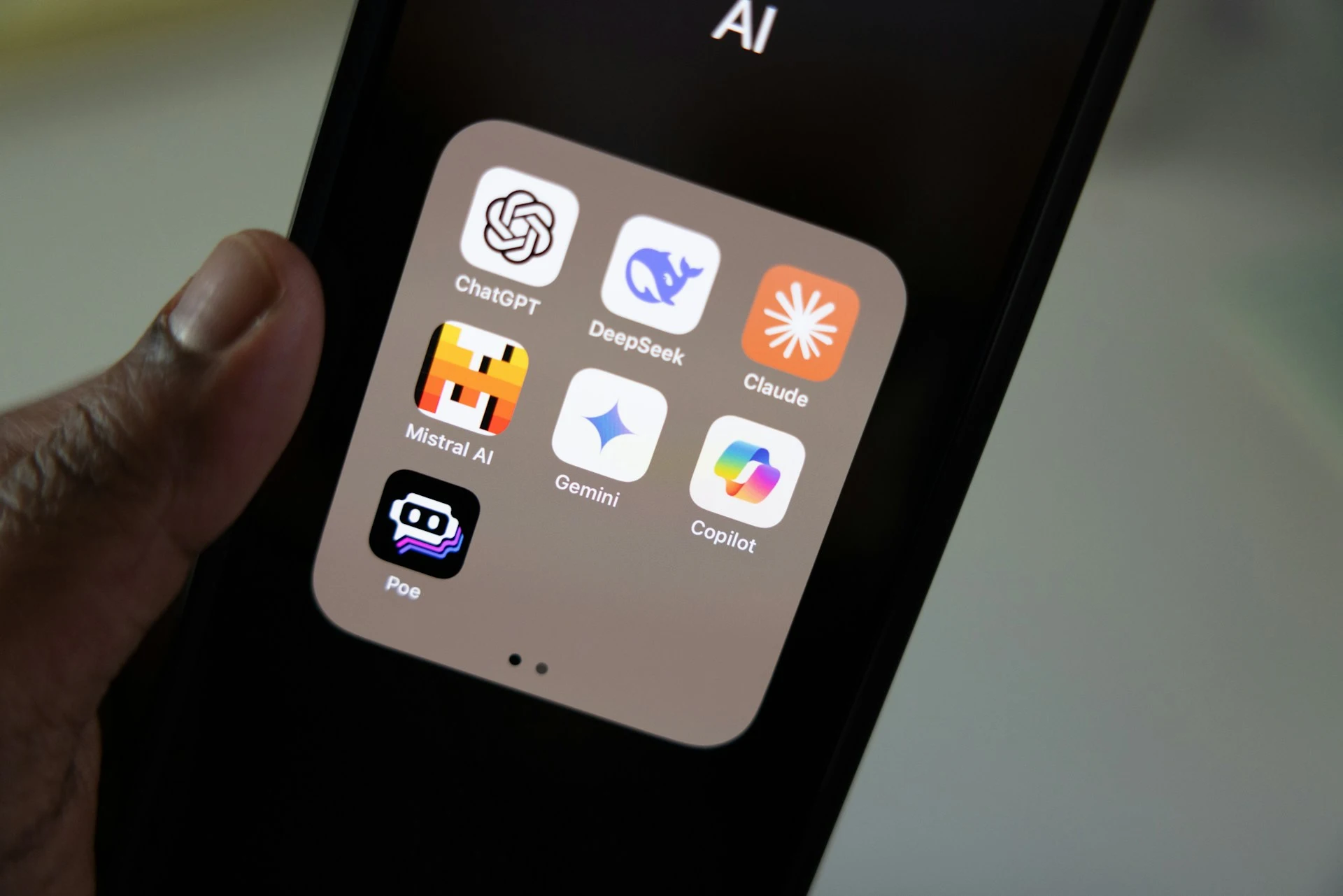
One limit remains: sensitive information like salary data, termination letters or personal conversation notes have no place in public tools like ChatGPT, Gemini or Copilot.
The legal framework: EU AI Act and GDPR
Anyone deploying AI in HR can't avoid the EU AI Act. The regulation has been in force since August 2024 and applies in stages. Since 2 February 2025, Article 4 has been binding: companies working with AI systems must ensure their staff have a sufficient level of AI literacy. That applies to HR teams using ChatGPT, Copilot or specialised AI tools too — and turns AI literacy into a core building block of HR transformation.
The high-risk classification is particularly relevant. AI systems that support decisions in sensitive HR areas count as high-risk applications: hiring and candidate pre-selection, promotions and internal staffing, performance evaluation and analysis, and termination decisions. These systems face strict requirements around data quality, documentation, transparency and human oversight. Candidates must also be informed when AI is involved in the selection process.
The obligations for high-risk systems originally scheduled for August 2026 have been pushed back through the European Commission's Digital Omnibus package: to 2 December 2027 for standalone high-risk applications (Annex III) and to 2 August 2028 for AI embedded in regulated products (Annex I). As of 2 August 2026, only the transparency obligations (Art. 50) apply. That gives companies breathing room — but no free pass. The requirements themselves remain in place, and implementing them takes months, not weeks.
In parallel, the GDPR continues to apply. Personal data of applicants and employees may not be fed into external AI systems without controls. Anyone sending a CV to ChatGPT for analysis or copying internal salary data into a public tool risks tangible data protection violations. How ChatGPT and similar tools can be used in a corporate context in a legally secure way is something we covered separately.
For exactly these regulatory questions, exchange with companies already in the middle of implementation pays off. At the SME Stage of d:u27 on 13 & 14 April 2027 in Münster, HR and compliance leads talk openly about how they are tackling the EU AI Act in an HR context — without sales pitch, with concrete examples and an honest balance sheet.
The typical pitfalls when deploying AI in HR
The potential is significant — and so are the risks. Anyone using AI in HR should be aware of at least four structural pitfalls.
Bias in training data. AI models learn from historical data. If certain groups have been systematically disadvantaged in the past, models pick up these patterns and reproduce them with high efficiency. Regular bias audits aren't optional — they are a basic requirement for any high-risk deployment.
Pseudo-objectivity. A score with two decimal places looks more objective than a human assessment. That's a dangerous illusion. The number is the result of model assumptions, data selection and weighting decisions — all of which were made by people. Anyone who takes AI outputs at face value doesn't improve decision quality; they just shift responsibility. What other ethical guardrails matter when deploying AI is something we explored in our article on AI ethics in companies.
Lack of acceptance in the team. The best AI solution fails when the people in HR don't understand it or don't back it. That's particularly true for tools that touch sensitive HR processes — performance analyses or attrition predictions, for instance. Transparency about how the system works and where its limits lie is a precondition, not a nice-to-have.
Tool selection before process understanding. Many companies start by asking which AI tool they should buy, before they have understood the process they want to improve. The result is expensive implementations that don't survive day-to-day use. A sensible entry point starts with an honest stocktake — and one clear question: which concrete bottleneck in our HR work do we want AI to solve?
Conclusion
AI in HR needs substance, not a quick fix
AI in HR is no longer a trend that can be sat out. From recruiting and skill matching to people analytics, learning and employee experience, it delivers measurable value — while also being one of the most regulated application areas around.
For SMEs, the takeaway is: start pragmatically, pick small use cases, and back them with proper documentation, trained teams and human oversight. AI doesn't replace people management. It shifts the focus away from routine work — towards decisions, relationships and the strategic development of the workforce.
The most concrete way to engage with this is in direct exchange with companies that are already in the middle of it: at the d:u27 Festival on 13 & 14 April 2027 in Münster. Six stages, 350+ speakers, 80+ masterclasses and over 250 exhibitors — and every question on the table. With HR, compliance and data leads who have already run the pilots, made the mistakes and found the solutions. Get your ticket for d:u27 now.
FAQ
What do HR teams use AI for most often in recruiting?
Most often for writing job ads: according to the Randstad ifo Survey, 70 percent of HR teams using AI in recruiting use it for this. Requirement profiles and interview guides can also be structured quickly with tools like ChatGPT.
Is AI allowed to pre-sort job applications automatically?
AI tools can match CVs and pre-sort applicants, but this is where the regulatory situation is most sensitive. The EU AI Act classifies AI systems for hiring and candidate pre-selection as high-risk, with strict requirements around data quality, documentation, transparency and human oversight. Candidates must also be informed when AI is involved.
Does people analytics replace conversations with employees?
No. People analytics delivers hypotheses and starting points, such as warning signals for attrition risk, which need to be tested qualitatively. Anyone who confuses pattern recognition with causality ends up making decisions based on correlations that do more harm than good.
Can I enter CVs or salary data into ChatGPT?
Personal data of applicants and employees may not be fed into external AI systems without controls, as the GDPR continues to apply. Sensitive information like salary data, termination letters or conversation notes has no place in public tools like ChatGPT, Gemini or Copilot.