
Prompt engineering: a skill in demand
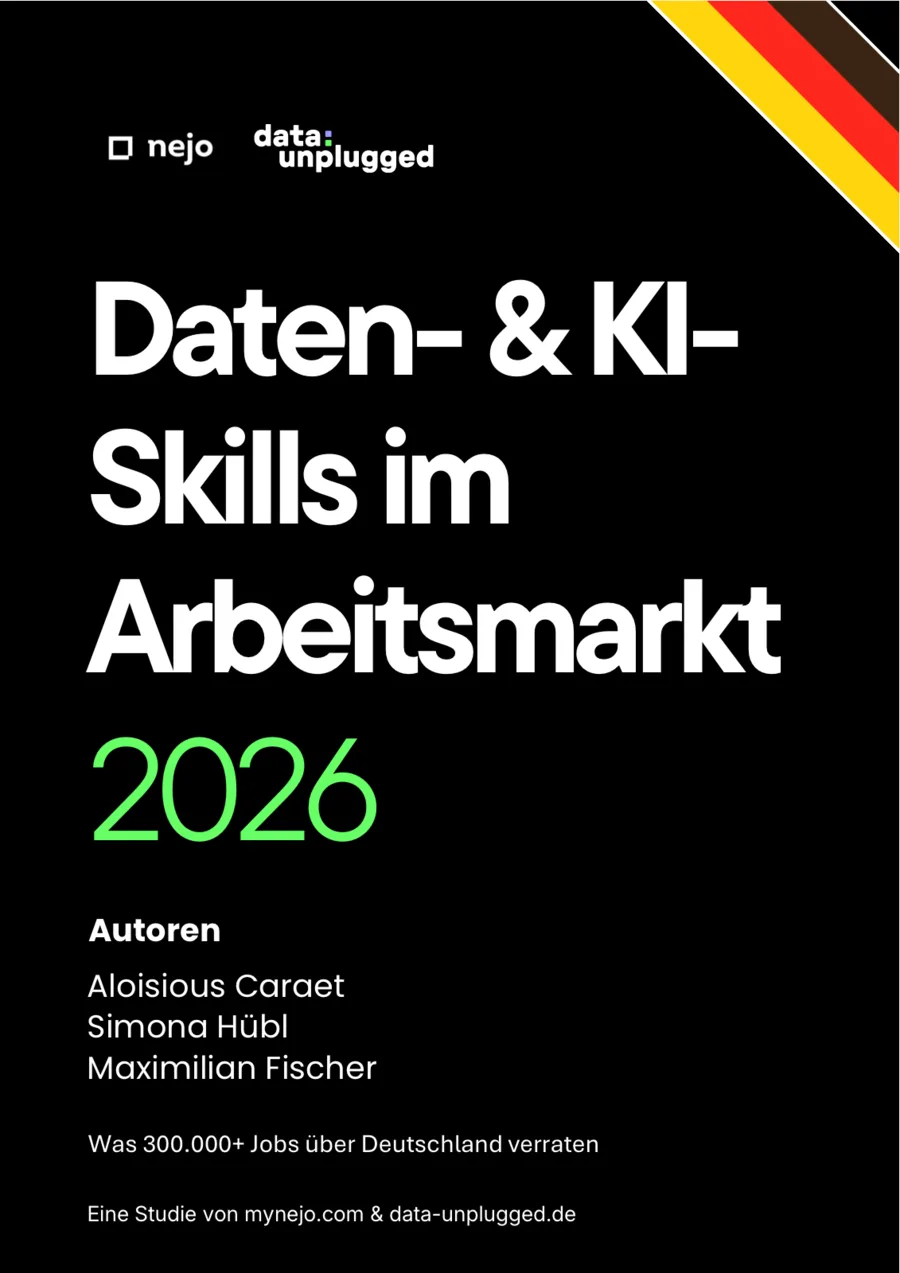
According to the DAISY Report 2026, prompt engineering is among the most sought-after skills. The report analyses 324,445 job ads for data & AI skills in the German job market.
What is an AI prompt?
The simplest definition: An AI prompt is the input that a user sends to an AI system. It is the instruction, question, or description on the basis of which a language model such as ChatGPT, Claude or Gemini generates an answer. Basically, the prompt works like a briefing: The clearer the task, the better the output.
Prompts can look very different. Sometimes it's a single sentence, sometimes a multi-part text with context, goal, style, and examples. It is not the length that is decisive, but the precision. Large language models work on the basis of probabilities. Every word in the prompt influences in which direction the AI model develops its answers. A vague input produces vague results. A well-thought-out prompt produces answers that can actually be used in everyday work.
Which AI tools does this apply to?
The principle applies equally to all AI tools:
- For ChatGPT and other chatbots that generate text-based answers
- For AI-powered image generators such as DALL-E or Midjourney, which generate images from prompts
- For specialized AI systems in business software that create code, analyses, or reports
Whether text, images or code: The quality of the output always depends on the quality of the prompt.
Prompt is not the same as a search query
A prompt isn't a Google search. With a search engine, keywords are enough. An AI model is about more: context, role, task and the desired outcome. Anyone who has understood this difference uses artificial intelligence much more effectively.
Why the AI prompt determines the quality of the results
Dealing with AI is often reduced to choosing the right tool. The real lever lies in the way employees interact with AI tools such as ChatGPT.
Same prompt, two results
Anyone who asks ChatGPT “Write me a text about digitization” gets a superficial answer. The answers remain generic, the style interchangeable, the information too general.
On the other hand, who says “You are a strategy editor for medium-sized companies. Create a draft internal newsletter about AI in purchasing. Target group: Managers without a technical background. Style: factual, concrete, maximum 300 words,” gets results that can be used directly. The same AI, the same tool — but a fundamentally different output.
The difference isn't in AI. He's right on the line. And this is exactly where it is decided whether a company uses artificial intelligence as a tool or just as a search engine. How companies can take this step strategically is shown by the d:u blog article on AI strategy in SMEs.
The five elements of a good AI prompt
A good prompt is no accident. It follows a structure. The following five elements help to formulate prompts in such a way that AI tools deliver significantly better results.
Assigning a role
Anyone who gives the AI model a clear role controls the perspective of the answer. “You are an experienced personnel consultant” provides different results than “You are a lawyer in the area of employment law.” The role influences the language, depth and content focus of the output.
Provide context
Without context, the model lacks classification. A prompt like “Summarize this text” can work. “Summarize this text. It is a strategy paper for the Executive Board, the summary is used as a draft decision,” provides a much more precise result. The more relevant context there is in the prompt, the better the answers.
Clearly define the task
Many prompts fail because the task is ambiguous. “Help me with marketing” is too unspecific. “Create three suggestions for LinkedIn posts on the topic of AI in retail, a maximum of 150 words each, factually inspiring style” is a clear instruction with measurable output. The more precise the topic and instructions, the better the results — regardless of the tool.
Set the format and style
Language models can represent almost any style — but only if they know which style they should use. Tonality, text length, target group, structure and language belong in the prompt. This applies to texts as well as analyses, tables and descriptions. Without a style specification, the AI model provides a generic mean value that rarely fits your own use case.
Give examples
Few techniques improve quality as reliably as a specific example in a prompt manner. This so-called few-shot prompting shows the AI model what is desired and significantly reduces the scope for interpretation. An example of the desired result makes the request comprehensible for the AI and the output significantly better.
From prompting to prompt engineering: When structure pays off
Improving individual prompts is the first step. AI prompt engineering goes one step further. It means working systematically on prompts, documenting them, testing them, and making them available as reusable templates. The approach transforms the use of artificial intelligence from improvised individual use into scalable expertise.
In many companies, the productive use of AI is not failing because of the technology, but because of the lack of systematics. The Boston Consulting Group distinguishes between “Deploy” and “Reshape”: Companies that only use artificial intelligence achieve moderate results. Those who adapt their processes and understand prompts as part of their workflows achieve significantly more.
What this means for decision makers
Prompt engineering is not an IT issue, but a question of work organization. When you standardize and optimize prompts for various tasks, you create a basis on which teams work faster and more consistently. Prompt engineering means developing interaction with AI models such as ChatGPT or Claude from improvisation to structured competence.
Practitioners will be showing how companies integrate prompting workflows into their processes at d:u27 on April 13 & 14 2027 in Münster. You can find an overview of all speakers here.
AI prompts in everyday business life: five applications
Prompts are not an issue for technology enthusiasts alone. In everyday life, this makes it possible to solve specific tasks faster and better.
Marketing and visual content
With a structured prompt, three variants of a social media post are created within minutes, tailored to the target group, platform and tone. Images can also be created promptly: AI tools such as DALL-E or Midjourney generate images for campaigns, newsletters or presentations from a detailed description. Good prompts save time not only for texts, but also when creating visual content.
Sales and customer communication
Discussion guidelines, complaint handling and follow-up emails can be generated promptly — adapted to industry, company size and phase in the decision-making process. A specific example: ChatGPT can create an industry-specific follow-up email from just a few pieces of information on a topic, which can be used directly.
HR and recruiting
AI prompts help with formulating job advertisements, summarizing applicant profiles, and creating onboarding materials. HR in particular shows how much quality a good context brings promptly: Anyone who gives the AI not only the job title, but also team size, corporate culture and desired style gets significantly more appropriate results.
Purchasing and Procurement
Contracts, supplier comparisons and market research can be pre-structured using AI tools. Anyone who provides the model with the right information as input receives analyses that are suitable as a basis for decision-making. The technology is only the tool — the added content is created by the quality of the prompts.
Internal communication
With just a few instructions, minutes, summaries, and presentation drafts can be created that teams can use directly. The content comes from people, and artificial intelligence structures and processes the information.
A deeper insight into how the language models behind these applications work is provided by our Blog articles about LLMs and language models.
Whether it's text work, data analysis or automation — At d:u27, AI workflows can be experienced hands-on in over 40 master classes. Find out why the d:u27 is the right event for you and your team.
The most common mistakes in AI prompting
There are typical mistakes that even experienced AI users regularly make. Anyone who knows them achieves better results with less effort.
Five mistakes that reduce the quality of results
- Formulate too vaguely: “Write me something about AI” is not a clear instruction. Without specifying the goal, target group and format, the answers remain generic.
- Put everything in one prompt: Breaking complex tasks into individual steps consistently delivers better results. This so-called chain-of-thought prompting is one of the most effective tools in prompt engineering.
- Don't check the output: AI systems generate plausible-sounding texts, even if the content is incorrect. The prompt delivers the draft — the final quality assurance remains with the person.
- Don't provide context: The model can only work with the information it receives. Industry context, internal preparatory work or style specifications make the difference.
- Don't iterate prompts: The first prompt rarely provides the optimal result. Good prompting is an iterative process — ask questions, clarify, change perspectives. The best results are achieved in dialogue with AI.
Seven tips for better AI prompts in practice
Anyone who knows the most common mistakes can immediately achieve better results with targeted adjustments. The following approaches can be applied directly to ChatGPT, Claude, and other AI tools.
Start concretely, iteratively refine
- Start with an example: Instead of describing abstractly what the output should be, give an example. For example, “Write me three subject lines in the style of this template: [insert example].” This makes the request comprehensible and the answers more precise.
- Formulate in natural language: Do not use keyword lists, but complete phrases. AI systems understand coherent language better than isolated words. Good prompts read like clear instructions to a competent colleague.
- Explicitly name the desired style: “Write factually and to the point” provides different results than “Write in an inspiring and personal way.” Style is a crucial part of every prompt, particularly when the results are used in communication.
Systematically increase quality
- Request several variants: A prompt such as “Create three variants” gives more choice and shows how differently the AI model can react to the same topic.
- Use negative instructions: Sometimes it helps the model to tell them what not to do: “No phrases, no marketing talk, no AI blah blah.” This sharpens output and reduces generic answers.
- Document the best prompts: Prompt templates collected and shared by the team form a prompt engineering system over time that everyone can use.
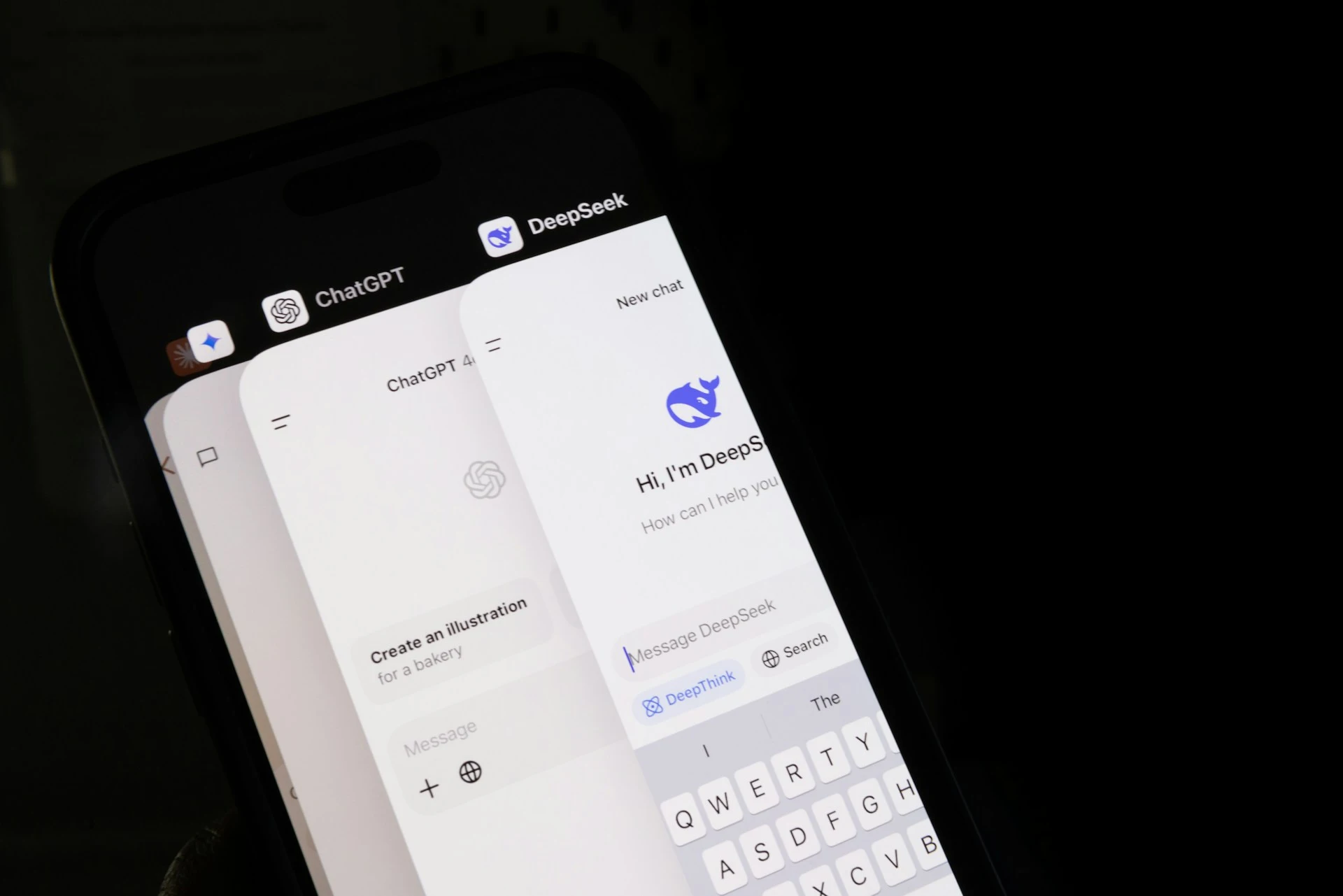
- Test various AI tools: ChatGPT, Claude, and Gemini react differently to the same prompts. Anyone who knows different tools selects the right tool for the respective task or allows the tools to work on the same task in parallel. This improves the outcome and reduces the likelihood of hallucinations.
Conclusion
The AI prompt as the key to better use of artificial intelligence
The difference between disappointing and convincing AI results rarely lies in the tool. It is due to the quality of the prompts. Anyone who provides context, formulates clear tasks, sets style and format and works iteratively uses artificial intelligence not only superficially, but as a tool in everyday working life. The tips and examples in this article show that no special technical knowledge is required to achieve better results with ChatGPT and other AI tools.
Good prompting is a skill that can be learned. With the right tips, clear instructions and well-thought-out wording, results are noticeably improved within a very short period of time — across all industries and departments, from marketing to HR to purchasing. Developing prompt engineering as a team's expertise is an investment that pays off.
You can find out how other SMEs go from occasional use of AI to structured prompt engineering on the data:unplugged festival 2027 on April 13 & 14 in Münster. At the SME Stage, companies share their experiences, and in the master classes it becomes concrete: How do you build up AI expertise in a team? Which prompt strategies work in practice?
AI prompting affects all areas of the company — from marketing to HR to purchasing. For successful implementation, it is important to involve and qualify key people. data:unplugged stands for practical transfer of knowledge — from which the entire team benefits. Get your ticket now!
FAQ
What is the difference between an AI prompt and a Google search?
With a search engine, keywords are enough. An AI prompt works more like a briefing: it includes context, role, task and the desired outcome. If you understand this difference, you use AI tools such as ChatGPT much more effectively.
What is few-shot prompting and why does it improve AI results?
With few-shot prompting, you give the AI model one or more concrete examples of the desired result. This shows the model what you want and significantly reduces the scope for interpretation. Few techniques improve output quality as reliably.
Do I need technical knowledge to start prompt engineering in my team?
No. Prompt engineering is not an IT issue but a question of work organisation. It is about documenting and testing prompts and making them available as reusable templates. Good prompting is a learnable skill across all departments.
Is it worth testing the same prompt in ChatGPT, Claude and Gemini?
Yes. The tools react differently to the same prompts. If you know several of them, you can pick the right tool for each task or let them work on the same task in parallel. This improves the outcome and reduces the likelihood of hallucinations.