
AI customer service: how German SME Burnhard automated 30% of its enquiries

In the Mittelstand, customer service is often where two problems collide: enquiries grow faster than the team does, while customer expectations keep rising at the same time. Anyone who's ever tried to double a support team in four weeks over the summer knows it simply doesn't work.
This is exactly where AI in customer service comes in. AI chatbots, voice agents, automated ticket routing and AI-assisted reply suggestions can ease the growing pains – if you deploy them well. A trend study by VIER shows that 93 per cent of the SMEs surveyed see AI as useful support in customer service, and two-thirds expect concrete cost savings.
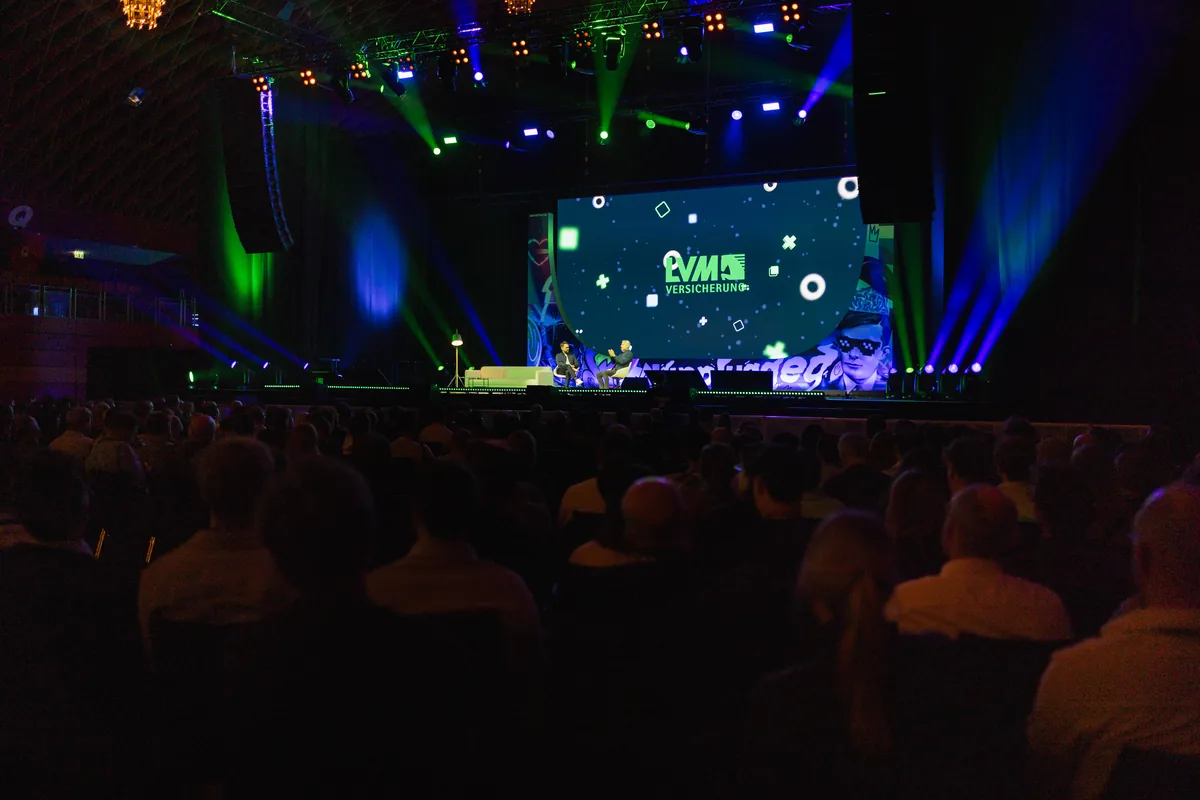
At d:u26, Düsseldorf-based BBQ SME Burnhard showed what that looks like in practice. Together with Cologne AI provider octonomy, it automated 30 per cent of all service enquiries – with 82 per cent positive feedback from customers. This article shows what can be learned from it: concrete use cases, selection criteria for different company sizes, and the classic pitfalls.
Why customer service is an ideal entry point for AI
Customer service has three characteristics that make it a good starting point for AI: high volume, recurring enquiries and a clearly measurable ROI. Unlike strategic AI projects, here you can show within a few weeks whether the technology works.
According to the Bitkom study 2026, artificial intelligence is in productive use in 41 per cent of German SMEs in 2026 – a doubling on the previous year. The Salesforce DMB AI Mittelstand Index 2026 adds that the use of AI agents has almost doubled within a year, with 16.6 per cent of SMEs already actively using them.
In customer service, artificial intelligence has an especially fast impact. Handling times for routine questions fall, staff are relieved and customers get answers more quickly. What works in practice are clearly defined use cases. What fails are unfocused AI initiatives that try to "somehow automate everything". The Burnhard case is a good example of the first path.
Four concrete use cases in customer service
1. AI chatbots for recurring enquiries
The classic in customer service. AI chatbots answer questions about delivery status, invoices, opening hours and product availability – which make up 40 to 60 per cent of all tickets in most SMEs. Modern AI chatbots no longer answer these customer enquiries from rigid FAQ trees, but in natural language and with access to live data from ERP, tracking and CRM.
AI chatbots are especially well suited to customers looking for quick answers – outside business hours or for simple standard questions. At Burnhard, those were the first two use cases: delivery status and product advice. Together they made up almost half of all tickets.
2. Voice agents for phone enquiries
AI voice agents conduct complete phone conversations, identify callers by their customer number, answer standard questions and pass more complex matters on to staff. AI agents of this kind are developing quickly in 2026. Providers such as Parloa (Berlin) and octonomy show that the technology is ready for productive use in the Mittelstand and in large corporates alike – including German data hosting.
Voice agents are especially worthwhile where call volumes are high and enquiries recur: delivery status, appointment booking, invoice questions. An added benefit: waiting times fall dramatically, because many calls are answered immediately. For complex advice, though, voice agents still reach their limits – at which point a human takes over.
3. AI-assisted reply suggestions for service teams
Instead of answering fully automatically, the AI suggests a draft reply to the support team, based on past tickets and the current customer history. The team reviews it, adjusts it and sends. Tools such as Zendesk AI and Salesforce Einstein offer this variant.
The advantage: service quality stays high, the team gets faster and waiting times fall. Staff keep control of the communication. The downside: scalability is limited. Every reply still needs a human.
4. Automatic ticket routing and prioritisation
Incoming emails, chats and calls are sorted by the AI according to topic, urgency and complexity, then routed to the right person. Sentiment analysis spots frustrated customers and prioritises their enquiries. This is often the most inconspicuous but most effective use of AI in customer service, and it substantially reduces waiting times for urgent questions.
The Burnhard case: how a BBQ SME cut costs by 30 per cent
Burnhard is Germany's largest D2C brand for gas grills and outdoor cooking, founded in Düsseldorf in 2018. Anyone who knows the company knows there are customers who get the Burnhard logo tattooed on themselves. Its social media community is large and loud, and word of mouth accounts for a high share of revenue. That makes the brand strong – but also particularly vulnerable when customer service doesn't deliver.
Then there's the seasonal business model. From March, sales climb sharply; in summer, the service team is at breaking point. In the past, that meant overload, long waiting times and frustrated customers. Burnhard needed a solution that was scalable but didn't sacrifice quality.
At d:u26, Carolin Schubert and Lena Niedziella of Burnhard explained, together with Ludger from octonomy, how they solved the problem. Three points from the talk are transferable to other SMEs. You can watch the full talk – along with all the other sessions from d:u26 – on demand in the d:u Education media library.
A clear focus on a few use cases
Burnhard didn't set out to "automate customer service", but chose two clearly defined use cases: delivery-status enquiries and pre-purchase product advice. Together they accounted for almost 50 per cent of all tickets – the ideal starting point.
Carolin Schubert: "We looked at which cases come up particularly often and which are relatively simple to solve and don't necessarily add value when a human handles them." That's the right question at the start of any AI project in customer service.
Prepare the data before the AI goes live
Burnhard had plenty of data, but not all of it was AI-ready. Instructions, product descriptions and FAQ texts had to be partly rewritten so the AI agent could relay them to customers correctly. Many companies underestimate this groundwork.
Technically, octonomy solves a problem that classic chatbots can't handle: the AI understands not just text but also context from visual documentation. For a gas grill with hundreds of components and a 56-page manual, it isn't enough for the bot to recognise keywords. It has to understand which screws belong to which step, and which spare part fits which model. octonomy calls this a multi-agent architecture: specialised agents for products, delivery times and complaints work together, rather than a single bot having to solve everything.
Systems were then connected: ERP for order data, a tracking tool for delivery information, Freshdesk as the customer service software. Only through this integration could the bot give concrete answers ("Your delivery arrives on 24 May, here's the tracking number") rather than generic ones ("Deliveries take 2–3 days").
A phased rollout rather than a full launch
Burnhard didn't roll the bot out across the board overnight. In the first phase it was optionally available on the website – customers could use it or go straight to a human. That achieved two things: first, Burnhard could test quality in real customer contact without taking a risk; second, customers got used to the new option voluntarily.
Only once it was clear the bot worked did it become the central point of contact. Even then, escalation to a human always stayed open. Anyone the bot couldn't help could switch to the service team at any time. This order matters: build trust, then scale.
Involve staff early
"If staff see it as a relief, a project like this works well. If they see it as competition, it gets difficult." That's how Carolin Schubert sums it up. Burnhard involved the service team in the testing before the bot went live. The result: staff actively backed the project rather than being sceptical.
The key point here: AI chatbots in customer service are meant to relieve staff, not replace them. Once the team understands that artificial intelligence takes on repetitive, recurring enquiries and frees up more time for demanding customer matters, attitudes towards the tool shift noticeably.
The numbers after implementation
- 30 per cent of all service enquiries answered automatically
- 30 per cent less seasonal hiring in peak season
- 30 per cent lower costs in customer service
- 82 per cent positive feedback ("thumbs up") after bot contact
- 24/7 availability, including weekends and public holidays
An important caveat: these are the numbers after automating two use cases. Burnhard has more planned – so the potential is far from exhausted. Lena Niedziella, in the talk: "The customer service team now has time again for value-adding work. The colleagues aren't answering 'when's my delivery coming' 20 times a day. The bot does that."
How to estimate the ROI of AI in customer service
Before SMEs invest in AI tools, they want to know what the deployment will actually deliver. A rough rule of thumb helps with an initial estimate.
The key figures come from your own company: how many tickets or calls come in per month? What's the average effort per enquiry in minutes? What does an hour of service staff cost (wage costs plus overhead)? A company with 5,000 tickets a month at 8 minutes' handling time each comes to 667 hours of effort. At €40 fully loaded cost per hour, that's just under €27,000 in monthly service costs.
Realistically, 20 to 40 per cent of that can be automated in the first year – depending on data quality and use-case selection. At 30 per cent automation (as at Burnhard), that means around €8,000 saved per month. From that you subtract the tool costs: typically €1,500 to €5,000 a month for an SME solution, plus one-off implementation costs of between €10,000 and €50,000.
The maths shows that an AI project in customer service usually becomes ROI-positive after 6 to 12 months. What many companies forget: the hard costs are only part of the picture. On top of them come soft factors: higher customer satisfaction thanks to faster answers, lower staff turnover thanks to less frustration, better scalability during growth phases. At Burnhard there's the seasonal effect too: no more need to hire staff at short notice over the summer.
Selection criteria for different company sizes
Which AI provider is right for customer service depends heavily on company size and enquiry volume.
For smaller SMEs of up to around 50 employees, simpler SaaS solutions such as Superchat, Tidio or Intercom Fin often make sense. Low entry costs, quick setup, no dedicated IT required. The depth of integration is limited, but for basic use cases it's enough.
For medium-sized to larger SMEs, specialised platforms such as octonomy (Cologne), Parloa (Berlin) or Cognigy are of interest. They offer deeper system integration, multi-agent architectures and are GDPR-compliant with German data hosting. Implementation time: two to four months for the first use cases.
For corporates with their own IT, it's often worth building in-house on foundation models (Claude, GPT, Mistral) with an orchestration layer such as Langdock or n8n. Maximum flexibility, but also maximum effort.
In every case: look for demonstrable results in your own industry context, clear escalation paths to a human and transparent pricing. More on the basics of choosing in our article on AI chatbots in the Mittelstand.
The classic pitfalls
Three mistakes crop up in almost every AI customer service project that fails.
Too many use cases at once. Anyone who tries to automate the entire service spectrum from day one gets defeated by complexity. Better: one or two clearly defined use cases, get the quality right there, then expand. Burnhard did exactly this – with delivery-status enquiries and pre-purchase advice.
Underestimating data quality. An AI is only as good as the information it works with. If product descriptions are out of date, instructions contradictory or FAQ texts unstructured, the bot will confuse customers rather than help them. Data preparation isn't a side project; it's often 30 to 40 per cent of the total effort of an AI project. More on getting the foundations right in our article on data architecture.
No clear escalation to a human. Customers tolerate AI in service, but only if they can switch to a human at any time. Anyone who blocks or hinders that risks the customer relationship. That's why Burnhard introduced the bot optionally at first and kept human escalation open in the second phase too.
There's also data protection: AI tools in support often process sensitive customer data. EU hosting, GDPR compliance and EU AI Act compliance are no longer nice-to-haves in 2026, but a must. Providers such as octonomy, Parloa and Langdock meet these data-protection standards from the ground up.
What SMEs should do now
Anyone looking to introduce AI in customer service should start with an honest stocktake. Which customer enquiries come up most often? Where does the support team spend the most time on routine tasks? What data exists for these use cases – and in what state?
The second step is choosing a suitable provider and a clearly defined pilot scope. Three months, one or two use cases, clear success metrics (automation rate, customer satisfaction, handling time). Those who start smaller learn faster. Crucially: the experience of staff in daily contact with customers should feed in from the outset. They know best which enquiries are genuinely frequent and where the AI should start.
Exactly what this path can look like, and which lessons learned other SMEs share, is one of the practical themes at the data:unplugged Festival 2027, from 13 to 14 April 2027 in Münster. German SMEs will show, on the Mittelstand Stage among others, how they're putting AI to productive use in customer service and other areas.
Conclusion: what matters in AI customer service in 2026
The Burnhard case shows that AI in customer service is no longer a mere future prospect in 2026, but delivers measurable results for SMEs with a clear focus and careful data work: a 30 per cent cost reduction, 82 per cent satisfied customers, a team with breathing room. What Burnhard implemented successfully can be transferred to other SMEs: a few use cases, a clean data foundation, early involvement of the team, clear escalation to a human.
What doesn't work is the idea that AI in customer service can be introduced without preparation. The technology is mature in 2026 – but it needs clear use cases and careful preparation of the data foundation.
Anyone looking for more practical insights and concrete experiences from the German Mittelstand is in the right place at the data:unplugged Festival. At d:u27, from 13 to 14 April 2027 in Münster, practitioners and AI experts discuss exactly these questions – on the Mittelstand Stage and in the masterclasses, hands-on and with concrete numbers. Get your ticket now for you and your business team and connect with the people already putting AI in customer service to successful use today.
More blogs



for the d:u27!