European AI in conversation: the d:u podcast
In the data:unplugged podcast, decision-makers, researchers and entrepreneurs talk hands-on about how AI and data create value in business.
Is there an European AI?
The short answer: yes, and it is becoming increasingly competitive. European AI is not a single product, but a growing ecosystem of companies, research institutions and political initiatives. For a long time, Europe was considered a laggard in global AI competition. The US dominates in venture capital and the number of AI unicorns, while China invests massively in state-sponsored AI infrastructure. But the momentum is shifting.
Growth, market volume and regulation
The European AI market is expected to grow to over 545 billion US dollars by 2031. And with the EU AI Act, Europe became the first major economic region to create a binding legal framework for the use of artificial intelligence — one that has applied to general AI models since August 2025. The full regulation of high-risk systems originally planned for August 2026 was postponed in 2026 through what is known as the Digital Omnibus: to 2 December 2027 for standalone high-risk applications (Annex III), and to 2 August 2028 for AI embedded in regulated products (Annex I). As of 2 August 2026, only the transparency obligations (Art. 50) remain in force.
European AI infrastructure under construction
At the same time, the EU is investing around ten billion euros by 2027 through the EuroHPC Joint Undertaking in high-performance computing infrastructures and so-called AI factories. The goal: Europe should not only remain an AI consumer, but should be able to develop, train and operate its own models. For companies in the DACH region, this means that dependence on US providers is not a foregone conclusion. There are European alternatives that are technically competitive and often better positioned from a regulatory standpoint.
Which European AI options exist? The 7 most important providers
The European AI scene can be roughly divided into four areas:
- Language models for text and code
- Specialised language AI for translation and text optimisation
- Visual AI for image generation
- Application-oriented AI solutions for specific business workflows
Within these areas, seven companies and their models have stood out in particular.
Mistral AI: Europe's most visible provider of Large Language Models
The French AI company Mistral AI is the most visible European provider of large language models. Founded in 2023 by former researchers from Meta and Google DeepMind, the start-up has become the most valuable AI company in the EU.
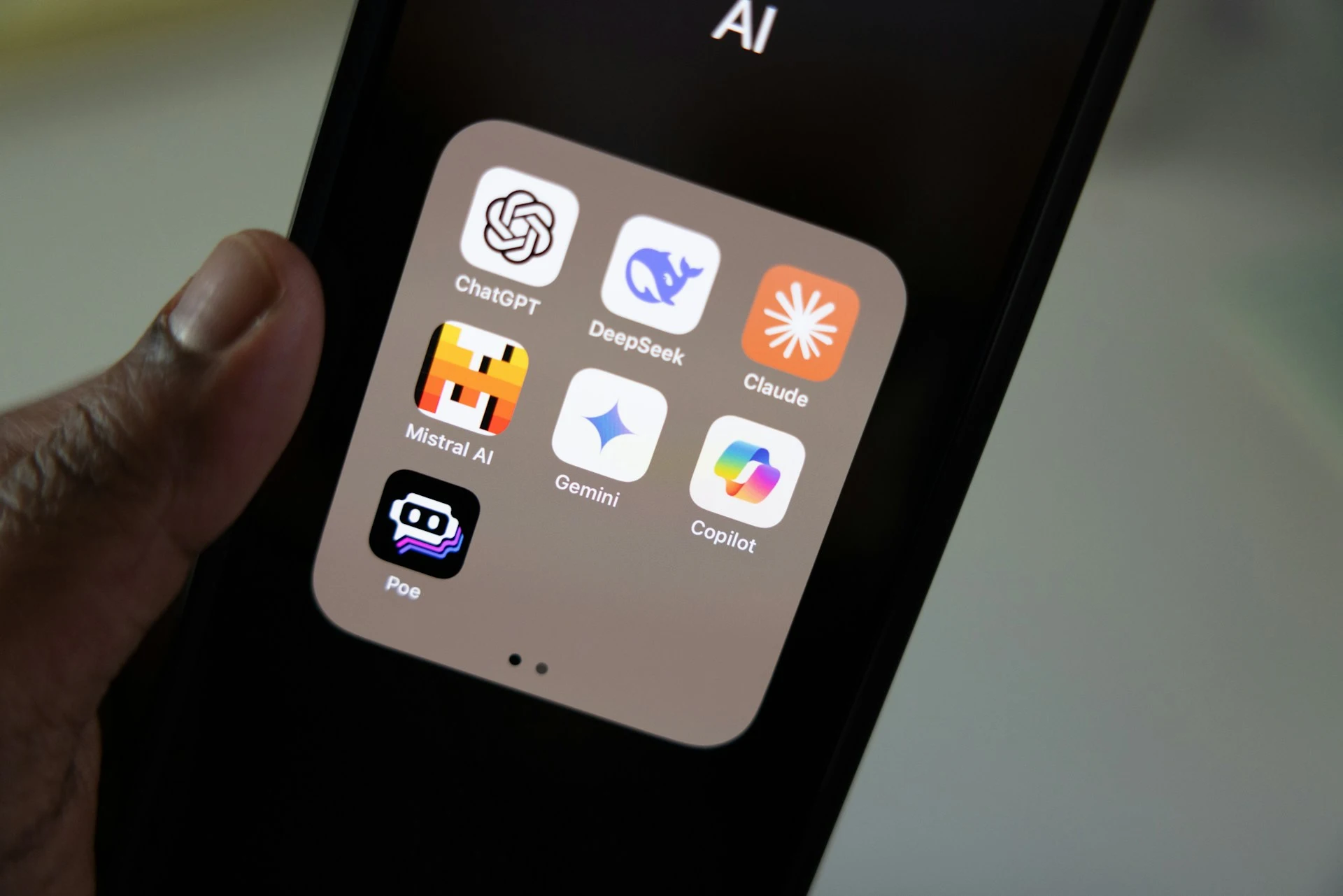
Mistral pursues a dual strategy: on one hand, developing powerful open-source models; on the other, proprietary systems for corporate customers. The most important models include Mistral Medium 3.5 as the current flagship, Mistral Large for complex tasks and long contexts, Mixtral as an efficient mixture-of-experts model, and Codestral for code generation. With Vibe — known as Le Chat until May 2026 — Mistral also offers its own AI assistant as a direct alternative to ChatGPT, since developed into an agentic work and coding tool.
Mistral is now the most highly valued AI company in the EU: in mid-2026 the start-up is negotiating a round of around 3 billion euros at a valuation of roughly 20 billion euros. Infrastructure development is particularly relevant for decision makers in SMEs: Mistral is currently investing 1.2 billion euros in a European data centre in Sweden and is building an independent AI infrastructure in Europe with the Mistral Compute platform. CEO Arthur Mensch describes the goal as technological sovereignty for Europe, with data processed and stored locally.
Aleph Alpha: a sovereign AI platform from Germany
Aleph Alpha from Heidelberg is positioning itself as a specialist for explainable and trustworthy AI. The company has specialised in so-called explainable AI, in which models can transparently document their results and sources. This makes the technology particularly relevant for regulated industries, the public sector and companies with high compliance requirements.
The focus is on PhariaAI as a comprehensive stack for evaluation, deployment and model management. Since 2024, the emphasis has shifted away from developing its own foundation models towards integrating and orchestrating existing (including open-source) models within a sovereign framework.
For companies where data protection standards and traceability are top priorities, Aleph Alpha remains a relevant European provider.
DeepL: European AI with direct business impact
DeepL is the fastest way for many organisations to achieve concrete results with European AI. Translation quality surpasses most competitors, particularly for European languages. The Cologne-based company has evolved from a pure translation service into a comprehensive language AI platform.
In addition to its core translation product, DeepL Write offers AI-based text optimisation that improves tone, style and grammar, and DeepL Voice now adds real-time speech translation. Both products can be integrated via API, making them suitable for companies that want to embed AI functions into their own workflows. Typical applications range from localisation and contract processing to multilingual customer support. For internationally active SMEs in particular, DeepL is a tool that delivers immediate value without major process changes — as the 2026 AI market overview also shows.
How European AI solutions work in everyday business life will be demonstrated by SMEs from a wide range of industries, as well as experts such as Felix Schlenther, Jens Polomski and Laura Lewandowski, and provider companies including Microsoft, Snowflake, Google Cloud, SAP and Canva at d:u27 on 13 & 14 April 2027 in Münster.
Black Forest Labs: visual AI from the Black Forest
Black Forest Labs from Freiburg was founded in 2024 by the developers behind Stable Diffusion and has created one of the most powerful AI solutions for image generation with the FLUX model series. At the end of 2025, the start-up closed a funding round of 300 million US dollars and reached a valuation of 3.25 billion US dollars — making it Germany's most valuable AI company.
The FLUX models are already being used in products from Adobe, Meta, Canva and Microsoft. They are particularly relevant for companies when it comes to marketing creatives, product visualisation or image variants at scale. Black Forest Labs offers both open-source models on Hugging Face and commercial enterprise solutions via its own API. Anyone looking to integrate image generation into existing workflows will find a European alternative to Midjourney or DALL-E here.
Stability AI: the open-source standard for image generation
The British company Stability AI has created a de facto standard in visual AI with Stable Diffusion. The model is integrated into numerous tools and platforms and forms the basis for a broad ecosystem of fine-tuning models and specialised applications. For companies, this means that the time to productive use is often short, because numerous integrations and guides already exist.
That said, decision makers working with image AI need to keep a close eye on rights and governance. Questions around copyright, prompt logging, output approvals and brand risk are often the decisive factor in visual AI — not the technology itself.
Synthesia: AI videos for training and communication
Synthesia from London is one of the most successful European companies in the field of applied AI. The company offers a platform for AI-generated videos with realistic avatars and has established itself particularly in the enterprise environment. Rather than developing foundation models, Synthesia focuses on a specific product that scales in areas such as training, internal communication and sales enablement.
In early 2026, Synthesia raised a Series E of 200 million US dollars at a valuation of 4 billion US dollars. Synthesia is particularly relevant for SMEs when training videos, product explanations or international rollouts need to be created on a regular basis. The platform makes it possible to produce videos in dozens of languages without the need for speakers, studios or complex post-production.
LightOn: sovereign AI platform for regulated environments
The French company LightOn positions itself as an enterprise and sovereign AI provider. With the LightOn Paradigm platform, the company targets organisations that want to operate generative AI in controlled environments — such as on-premises or in private cloud infrastructures.
LightOn is therefore particularly relevant for companies in regulated industries such as finance, healthcare and the public sector. Partnerships in the public sector underline its sovereignty positioning. LightOn has also been listed on Euronext Growth Paris since December 2024 — the first publicly listed GenAI company in Europe. For decision makers looking less for a single model and more for a turnkey AI platform with a governance focus, LightOn is a relevant European option.
European AI like ChatGPT: What are the differences?
Anyone looking for a European AI like ChatGPT will quickly land on Mistral's Vibe — known as Le Chat until May 2026. The AI chatbot offers similar functions to its US counterpart, including text generation, web search, code assistance and, since the end of 2025, a voice mode for spoken conversations.
The difference lies in the infrastructure
European AI providers such as Mistral or Aleph Alpha run their models on European servers and are subject to the GDPR. That may sound like a detail, but for many companies it is a decisive criterion. Anyone who has sensitive company data processed by an AI assistant needs to know where that data ends up and who has access to it.
Where US providers continue to lead
OpenAI and Google remain leaders in terms of pure model size and training budgets. In practice, however, SMEs are often less concerned with maximum model performance and more with integration into existing processes, language quality in German and whether a solution is compatible with their existing data protection framework. The guide to AI implementation for SMEs describes how companies can approach the introduction of AI in a structured way.
Why European AI is particularly relevant for SMEs
Three developments make European AI a strategic issue for decision makers in 2026:
- EU AI Act: The full regulation of high-risk systems has been postponed through the Digital Omnibus to 2 December 2027 (Annex III) and 2 August 2028 (Annex I); as of August 2026 the transparency obligations apply. Companies that already rely on EU-compliant providers save themselves time-consuming compliance work down the line. European AI companies have factored this regulatory framework in from the outset.
- Data sovereignty as a competitive factor: Customers, partners and regulatory authorities expect increasing transparency about where and how data is processed. Anyone running AI applications on European infrastructure has an advantage here.
- Practicable European AI technology: From Mistral's language models and the FLUX models from Black Forest Labs to the sovereign AI stacks from Aleph Alpha and LightOn — the technology is mature enough for productive use.
GDPR compliance, European infrastructure and regional data storage — at our events, decision makers from SMEs will discuss how to combine data sovereignty with AI adoption. Find out why d:u27 is the right event for you and your team.
Outlook: Europe's next wave is agentic
Alongside the established providers, a younger generation of AI companies is growing up in Europe, built around autonomous, agentic systems. The Paris-based company H Company, for instance, develops what it calls action models, which operate software independently and work through multi-step tasks in digital environments. The French research lab Kyutai is advancing open real-time speech AI, including the open-source model Moshi. Both are still at an early stage, but they show where European AI is heading: towards systems that do not just answer but act — with an open approach oriented towards sovereignty.
Conclusion
European AI is ready for the market — now it's time to implement
The European AI landscape has changed fundamentally over the past two years. It has grown from a niche topic into a relevant market — with billion-dollar valuations, powerful models and a positioning built around data protection, sovereignty and practical applicability. For decision makers in SMEs, the question is no longer whether European alternatives exist, but which of them best fits their own company.
Getting started can begin with a manageable project. A pilot with DeepL for internationalisation, an initial test phase with Mistral for internal knowledge work, or an evaluation of Black Forest Labs for marketing creatives — each of these steps delivers concrete insights into what European AI can do in your specific context.
Which European AI solutions actually hold up in production becomes clear at the d:u27 Festival on 13 & 14 April 2027 in Münster. Six stages, 350+ speakers, 80+ masterclasses and over 250 exhibitors, covering European AI models, data sovereignty and the EU AI Act — with decision-makers, IT and compliance leads who've already worked through the rough patches. Get your ticket for d:u27 now.
FAQ
When do the EU AI Act rules for high-risk AI systems apply?
The EU AI Act has applied to general AI models since August 2025. Full regulation of high-risk systems was postponed via the Digital Omnibus: to 2 December 2027 for standalone high-risk applications (Annex III) and to 2 August 2028 for AI embedded in regulated products (Annex I). The transparency obligations apply from 2 August 2026.
Is there a European alternative to Midjourney or DALL-E for image generation?
Yes. Freiburg-based Black Forest Labs offers its FLUX model series as open-source models and as commercial enterprise solutions via API. Stability AI's Stable Diffusion is also integrated into numerous tools. With image AI, you should always keep questions of copyright, output approvals and brand risk in mind.
Which European AI platform suits regulated industries or on-premises operation?
With LightOn Paradigm, LightOn targets organisations that want to run generative AI in controlled environments, such as on-premises or in private clouds. Aleph Alpha offers PhariaAI, a stack for evaluation, deployment and model management within a sovereign framework. Both are particularly relevant for companies with high compliance requirements.
How can an SME get started with European AI?
You can start with a manageable pilot project. Examples include DeepL for internationalisation, a test phase with Mistral for internal knowledge work, or evaluating Black Forest Labs for marketing creatives. Each of these steps shows what European AI can do in your own context.