
Go deeper on generative AI, free and online
d:u Education offers talks and masterclasses from d:u26 and d:u Deep Dive, including generative AI & LLM implementation. Free access, at your own pace.
What is generative AI? A definition
Generative AI is a branch of artificial intelligence that independently creates new content. This could be texts, images, videos, audio, code or even 3D models. In contrast to classic AI systems, which analyze existing data, recognize patterns or make predictions, generative AI produces something new based on learned patterns.
The basic principle
Generative AI models are trained with large amounts of data. In doing so, the models learn statistical relationships between words, pixels, or sounds. If you then give such an AI model a task — a so-called input or “prompt” — it generates an answer based on the learned patterns. The result is not a copy-paste from the training data, but a new combination of the recognized patterns.
Foundation models and language models
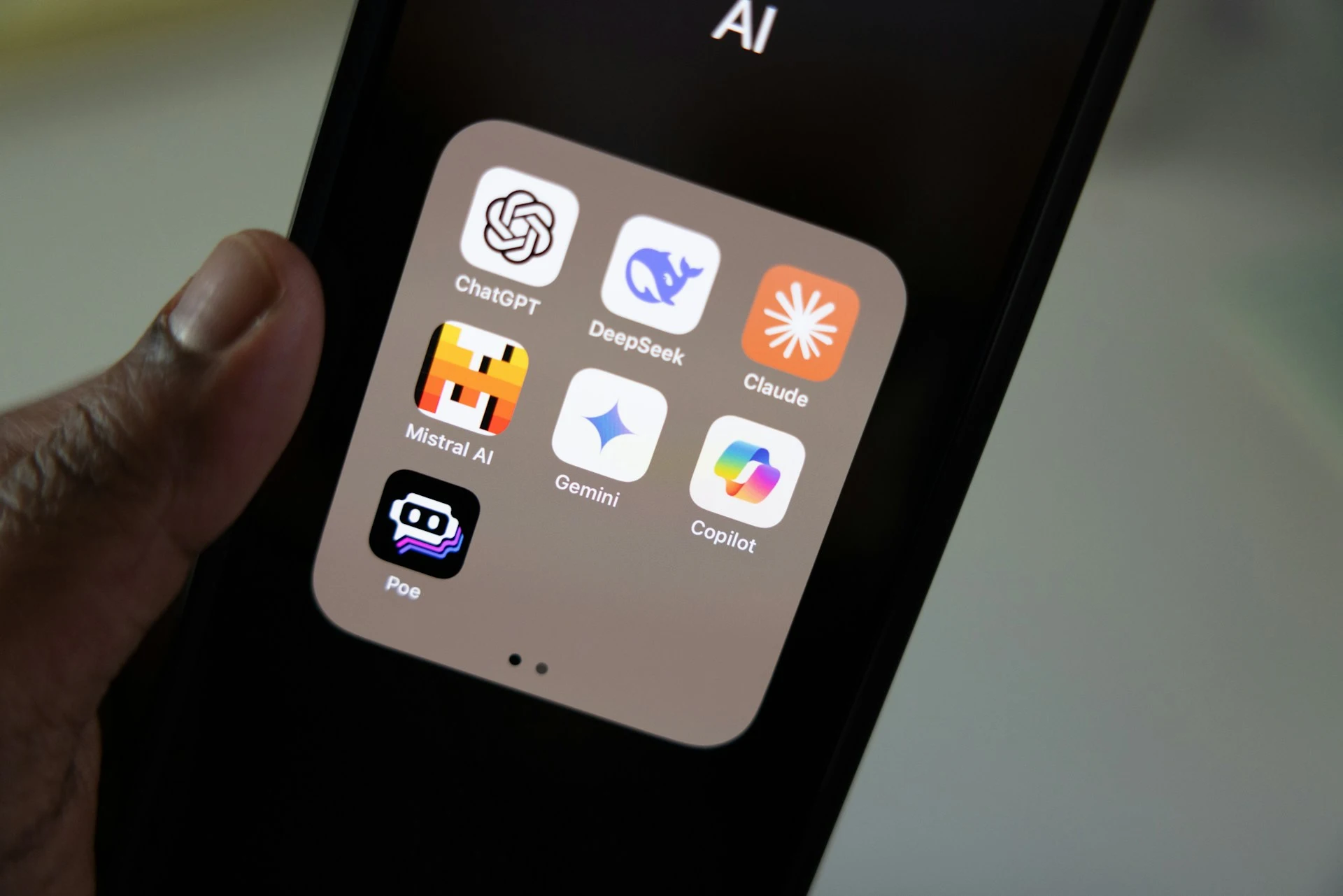
The technological basis is formed by so-called foundation models — large, pre-trained AI models that are based on huge amounts of data and can be adapted for various tasks. The best-known examples are large language models (LLMs) such as GPT-4, Claude or Gemini. These foundation models specialize in processing language, generating texts and providing appropriate answers to complex inputs. If you want to delve deeper into how language models work, you will find in the article Understanding language models: What decision makers need to know about LLMs an understandable classification.
What types of generative AI are there?
In addition to text models, there are generative AI systems for various media formats:
- pictures: Tools such as Midjourney or DALL-E generate visual content from text descriptions
- Audio and music: Generative models compose music or synthesize speech
- Video: Increasingly powerful models generate short video sequences
- Code: Language models support software development through automated code generation
- Industry applications: Specialized models for product development, engineering, or simulation
Generative AI vs. classic AI: What's the difference?
In everyday life, the terms are often mixed up, and the distinction is worthwhile. Generative AI is a branch of artificial intelligence that is fundamentally different from other AI applications.
Classic AI: Analyze and Classify
Classic AI systems — often based on machine learning — are designed to analyze existing data, recognize patterns and draw conclusions from them. An example: Predictive AI in sales evaluates historical sales data and predicts which customers are highly likely to drop out.
Generative AI: Analyze and Create
Generative AI goes one step further. She uses the learned patterns to create something new: new texts, images, content, or code. Generative AI in sales could, for example, formulate personalized emails for exactly these customers who are at risk of bouncing, including appropriate arguments and tonality.
Both approaches are justified and often complement each other in practice. If you want to get an overview of which forms of AI are currently shaping the market, you can find this in AI market 2026 overview.
Why generative AI is becoming so relevant right now
The technology behind generative AI has been around for years. Transformer architectures, on which most of today's foundation models are based, were presented in research back in 2017. But three factors have ensured that Generative AI has become a strategic issue for companies in 2025 and 2026.
Three factors that explain the breakthrough
- Accessibility: With ChatGPT, Claude and other tools, generative AI has become available to everyone — without programming knowledge, without their own cloud infrastructure, without a large budget. The models run in the cloud and can be operated via simple inputs.
- efficiency: Current generative AI models deliver results at a professional level — when creating texts and content, generating code, and analyzing large amounts of data. The ability to generate images and videos has also developed significantly in a short period of time.
- Economic pressure: One KPMG study from 2025 shows that 91 percent of German companies now regard generative AI as business-critical — compared to 55 percent in the previous year.
Even the Bitkom survey from 2025 confirms the trend: 36 percent of companies in Germany are already actively using AI — almost twice as many as in the previous year.
Generative AI examples: Where technology actually helps companies
Generative AI is often used not in large transformation projects, but in everyday processes. An overview of the most important generative AI use cases.
Content creation and communication
Generative AI can significantly speed up content creation. This ranges from offers and product descriptions to texts for the website and customer presentations. Instead of spending hours working on a summary, a language model formulates a draft in seconds, which is then professionally reviewed. Generating images for presentations or social media content is also one of the common generative AI use cases.
Customer Service and Conversational AI
AI-supported assistance systems answer standard customer service inquiries, summarize conversation processes and suggest appropriate answers. Conversational AI based on generative AI models provides significantly more natural answers than rule-based chatbots. This is not a substitute for human advice, but a relief from recurring tasks.
knowledge management
Especially in medium-sized companies, experiential knowledge is often tied to individual people. Generative AI can help to tap into internal knowledge and make it accessible. Whether manuals, process documentation or technical specifications: Generative AI models help make existing content efficiently usable.
Research, product development and industry
In industry and in technically-oriented companies, generative AI supports prototyping, simulations or automated documentation of development processes. In research and development, generative AI models accelerate the evaluation of scientific data and the generation of new hypotheses. The generation of synthetic training data for proprietary AI systems is also becoming increasingly important in industry. With the “AI Innovation Competition — Generative AI for SMEs”, the Federal Ministry of Economics and Climate Protection is specifically promoting such applications.
Sales, marketing and software development
For a long time, personalized speech was reserved for big players. Generative AI also makes personalized content scalable for smaller companies: individual emails, data-based product recommendations or the automated creation of texts and images for social media channels. In software development, generative AI models support the creation of code and thus accelerate the development of new applications.
Practitioners will be showing how companies are using generative AI productively beyond initial experiments at d:u27 on April 13 & 14 2027 in Münster. You can find an overview of all speakers here.
What generative AI can't
Generative AI models do not provide reliable facts. They hallucinate — that is, they produce plausible-sounding texts and content that may be incorrect in terms of content. Each outcome requires professional review by people who understand the context.
The limits of technology
- No meaning, just probabilities: Generative AI processes statistical patterns, not contextual relationships. This makes the models powerful tools for generating texts, images and code — but not a substitute for strategic thinking or management decisions.
- Dependence on data quality: Companies that have not systemically maintained or structured their own database will not achieve convincing results even with generative AI.
- No independent thinking: The capabilities of generative AI lie in pattern recognition and recombination — not in independent analysis or judgement.
How to get started with generative AI
For companies that want to use generative AI, a pragmatic four-step approach has proven effective.
Step 1: Inventory
Where are repetitive tasks that are language-based, text-heavy or data-intensive? Where are many texts, emails or content created manually? This is often where the greatest potential for generative AI use cases lies.
Step 2: Start pilot project
Instead of setting up a company-wide AI strategy, it's worthwhile to start with a clearly defined use case — such as automated summarization of protocols or customer service support.
Step 3: Build up expertise
Generative AI is only as good as the people who work with it. Training employees is a prerequisite — this includes understanding the capabilities and limits of the models and learning to assess risks when dealing with sensitive data.
Step 4: Find an exchange
Governance, data protection and quality assurance when using generative AI — At d:u27, decision makers from SMEs will discuss how to solve these challenges. Find out why the d:u27 is the right event for you and your team.
Generative AI as a strategic course
Generative AI is not a short-term trend. Technology is changing how companies work, create content, and make decisions. The KPMG study shows: 82 percent of companies plan to increase their AI budgets over the next twelve months.
For SMEs, this means that the question is not whether generative AI will be relevant, but when to get involved. If you wait too long, you risk not only efficiency and productivity benefits, but also access to specialists who want to work where modern AI systems are used.
At the same time, there is an opportunity right here. Medium-sized companies can tailor generative AI models specifically to their strengths: deep industry knowledge, close customer relationships and rapid decision-making processes.
Conclusion
Understanding, Trying, Designing
Generative AI is neither a panacea nor a threat. It is a tool with growing capabilities that needs to be understood, tested and used strategically. For decision makers in SMEs, this means identifying a specific use case and taking action.
You can find out how other SMEs are getting started with generative AI at the data:unplugged festival 2027 on April 13 & 14 in Münster. At the SME Stage, companies share their experiences with generative AI, and in the master classes it becomes concrete: Which generative AI use cases are worthwhile? How do you start a first pilot project?
Generative AI affects all areas of the company — from marketing to product development to management. For successful implementation, it is important to identify, involve and qualify key people. data:unplugged stands for practical and department-specific knowledge transfer — from which the entire team benefits. Get your ticket now!
FAQ
Does generative AI simply copy content from its training data?
No. During training, generative AI models learn statistical relationships between words, pixels or sounds. In response to a prompt, they produce a new combination of these recognised patterns, not a copy-paste from the training data.
Is generative AI the same as a large language model like ChatGPT?
Not quite. Large language models such as GPT-4, Claude or Gemini are the best-known foundation models and specialise in language. Generative AI also includes systems for images, audio, music, video and code, as well as specialised industry models.
Do I need programming skills to use generative AI in my company?
No. Tools such as ChatGPT or Claude can be used without programming knowledge, your own cloud infrastructure or a large budget. It is important, however, to train employees so they understand the capabilities and limits of the models and can assess risks when handling sensitive data.
Can I rely on the facts generative AI provides?
No. Generative AI models can hallucinate, producing plausible-sounding content that is factually wrong. They process statistical patterns, not meaning. Every result therefore needs a professional review by people who understand the context.