
German AI: the 8 most important companies and models in 2026

While OpenAI, Anthropic and Google dominate the headlines, Germany has developed an AI landscape of its own. It's smaller, less loud, but technologically well worth taking seriously.
What sets German providers apart: data sovereignty, GDPR compliance, German-language models and close ties to industry and the Mittelstand. Anyone in Germany looking for an alternative to ChatGPT, Gemini or Claude will find, in 2026, a range of serious providers – from foundation models to specialised AI applications.
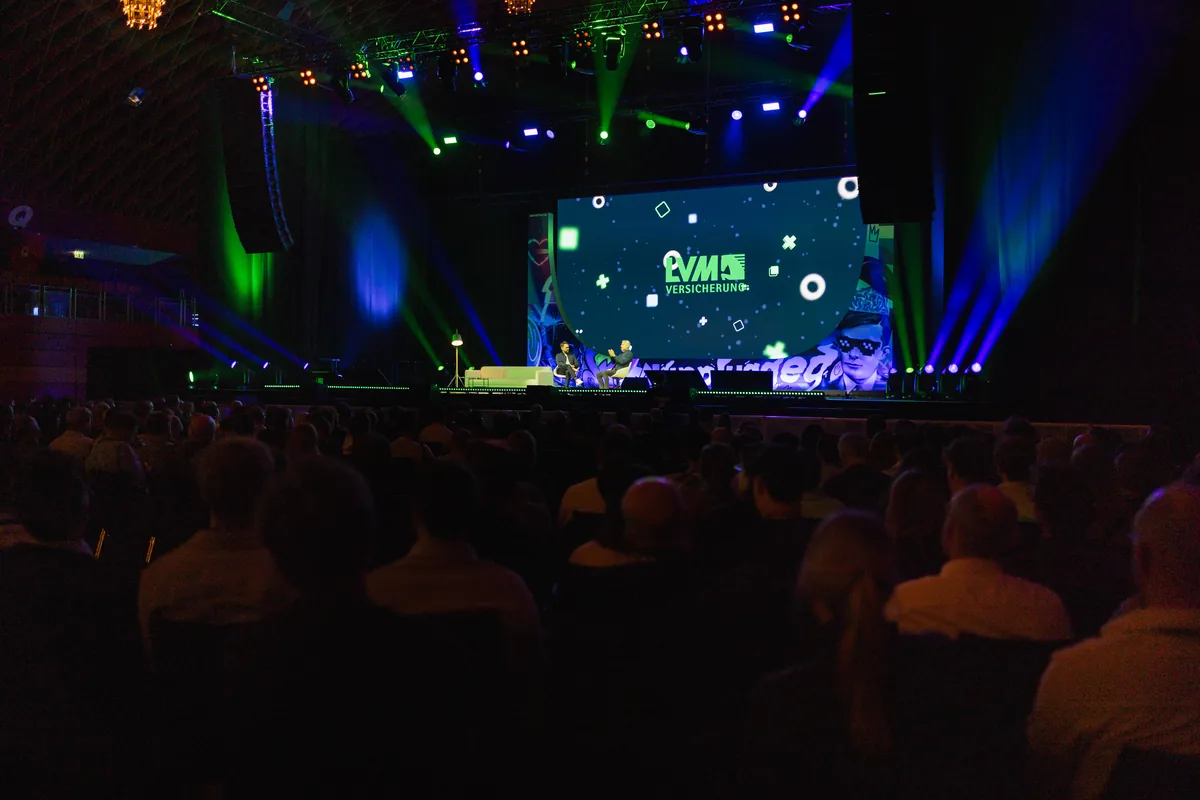
At d:u26, Elisabeth L'Orange, co-founder of Oxolo and a Deloitte partner for AI and data, put it in a nutshell: "The differentiation will happen when Germany's Mittelstand manages to orchestrate its data and train small models on it." This is exactly where the opportunity lies for German AI companies and their customers. If you'd like to watch L'Orange's keynote in full, you'll find it along with all the other talks and masterclasses from d:u26 on demand in the d:u Education media library.
This article introduces the eight most important German AI providers of 2026, each with an honest assessment of what they're good for and what they aren't.
How the German AI landscape has developed in 2026
Artificial intelligence has arrived in the German Mittelstand. According to the Bitkom study 2026, 41 per cent of German companies with 20 or more employees now actively use AI – a doubling from 17 per cent the year before.
At the same time, 33 per cent report that AI is costing more than expected. 19 per cent have already cut jobs as a result. The initial experimentation phase is over. Anyone investing in German AI solutions in 2026 expects fewer sweeping promises and more concrete applications with a measurable ROI and data control that's compatible with the EU AI Act.
In her d:u26 keynote, L'Orange pointed to another uncomfortable figure: only around 60 per cent of all company data is currently prepared in an AI-ready form. So anyone weighing up German AI providers should first get their own data in order. More on that in our article on data architecture.
Language models and foundation AI
1. Aleph Alpha (Heidelberg)
Aleph Alpha is the best-known story in German AI – and, in 2026, the most ambivalent. Founded in 2019 by Jonas Andrulis, the startup raised over €600 million and built sovereign AI for public authorities and regulated industries with Luminous and PhariaAI.
In October 2025, Andrulis stepped down as CEO; in January 2026, 50 jobs were cut. In April 2026, Canadian provider Cohere announced the acquisition: a $20 billion valuation, with the Schwarz Group investing $600 million as lead investor.
The headquarters remain in Heidelberg. The PhariaAI platform has been rolled out across several German federal ministries and is used in finance, defence and the public sector.
Who it's relevant for: public authorities, financial services providers and regulated industries that can't use a US cloud under GDPR and the EU AI Act.
Image and media generation
2. Black Forest Labs (Freiburg)
Black Forest Labs is one of the standout German AI stories of 2026. Its three founders – Robin Rombach, Andreas Blattmann and Patrick Esser – are the developers of Stable Diffusion. After leaving Stability AI, they founded Black Forest Labs in Freiburg im Breisgau in 2024.
Their current model, FLUX.2, released in November 2025, ranks among the best image-generation models in the world. In January 2026, the company released FLUX.2 [klein] as an open-source model under the Apache 2.0 licence – a rare and bold move in a market that's increasingly betting on proprietary models.
With FLUX.1 Kontext, existing images can be altered in a targeted way. For marketing teams that want to show products in different settings, that saves significant production time.
Who it's relevant for: e-commerce, marketing teams and agencies – anywhere high-quality image AI with EU data residency is in demand.
3. DeepL (Cologne)
DeepL is Germany's most successful AI company by revenue and global market position. The Cologne-based language specialist serves, by its own account, more than 200,000 teams. Its 2026 valuation sits at €1.7 to €2 billion, and an IPO is possible in 2026.
In April 2026, DeepL launched "Voice-to-Voice" – live translation of speech in real time. In May 2026, however, the company had to cut 250 jobs (one position in four), a sign of the tougher market position against Google Translate and AI giants with their own translation capabilities.
CEO Jarek Kutylowski was appointed to the German Chancellor's strategy circle for technology and innovation in November 2025. In 2025, DeepL also received the C5 Type 2 attestation – an important data-protection standard for German enterprise customers.
Who DeepL is relevant for: international SMEs that need professional, high-quality translation with GDPR compliance.
4. Oxolo (Hamburg)
Oxolo is the company Elisabeth L'Orange co-founded in Hamburg in 2020. Originally a pioneer in AI video production, with 600,000 users and €13 million in funding, the generative AI startup has since pivoted: today Oxolo delivers an AI platform for documenting conversations, meetings and construction-site inspections.
The solution turns spoken information into structured minutes, tasks and documentation. The pivot reveals a reality of German AI startups: those who can't compete against US giants in the mass market for generative AI often find a better niche in the B2B market for specialised applications.
Who Oxolo is relevant for: sectors with lots of coordination and on-site appointments – construction, consulting, skilled trades, plant engineering.
Specialists for business applications
5. Celonis (Munich)
Celonis co-invented the term "process mining". Founded in 2011, the company is Germany's most valuable startup at around €11.3 billion and is planning an IPO in 2026.
At its Celonis: Next conference in 2026, the company unveiled the Celonis Context Model (CCM), a digital twin of business operations that processes real-time data from ERP systems. With the acquisition of Ikigai Labs, Celonis is shifting from an analysis tool to an active control layer for automated processes.
Who it's relevant for: SMEs and large corporates that want to steer their processes with AI-driven decision intelligence, especially in manufacturing, banking and logistics.
6. Parloa (Berlin)
Parloa builds AI voice agents for customer service. In January 2026, the company – founded in 2018 – raised $350 million, tripling its valuation to $3 billion.
Concrete customer examples: Berlin Brandenburg Airport uses a multilingual voice agent called "Berry". With Booking.com, Parloa won bronze at the European Contact Centre & Customer Service Awards. The company employs 350 people in Berlin, Munich, London and New York.
Who it's relevant for: SMEs and corporates with a high volume of calls and customer service enquiries.
AI platforms for the Mittelstand
7. Langdock (Berlin)
Langdock is one of the most remarkable German AI stories of 2026 – even though many people still haven't heard of it. Founded in 2023, the Berlin startup grew its revenue tenfold within a year and is already profitable. Annual revenue: over €16 million; more than 3,000 customers.
Langdock offers a GDPR-compliant enterprise AI platform for the Mittelstand – with ISO 27001 and SOC 2 Type II certification, EU hosting and a self-hosting option. Through the platform, companies can use various AI models (Claude, GPT, Gemini, Mistral) centrally and build AI agents and workflows.
Customers include Merck, Mobile.de, Babbel and Flensburger Brauerei. Walid Mehanna, Chief Data & AI Officer at Merck, describes Langdock as a "company-wide AI companion".
Who Langdock is relevant for: the classic answer to the Mittelstand's question, "How do we introduce AI without taking on the risks of ChatGPT?" More on getting started in our article on working with AI.
8. n8n (Berlin)
n8n was founded in 2019 by Jan Oberhauser in Berlin and, since May 2026, has been valued at $5.2 billion – a doubling in under a year, triggered by a strategic investment from SAP. The n8n platform is now integrated natively into SAP Joule Studio, the agentic AI development environment of the SAP Business AI Platform. n8n is open source and offers a construction kit for AI workflows with more than 400 integrations.
Unlike Lovable or Bolt, n8n is aimed at users with a bit more programming experience. The AI writes the code, but the workflows can be steered precisely. That makes n8n especially attractive to SMEs that want to avoid vendor lock-in.
Who n8n is relevant for: companies that want to embed AI workflows deep in their existing IT – particularly SAP customers, who will benefit from the native integration in the coming months.
What the German AI landscape means for the Mittelstand
Three observations from this list.
First: Germany can do AI – but rarely frontier models. Its strength lies in application, specialisation and data sovereignty. That chimes with L'Orange's d:u26 thesis: differentiation comes not from the biggest models, but from the best data orchestration in the Mittelstand.
Second: there are two clear clusters. Highly valued specialists like Celonis and Parloa, which are world-class in their niches. Alongside them, pragmatic platforms like Langdock and n8n that make AI accessible to the broad Mittelstand.
Third: the Schwarz Group has become the single most strategically important player in the German AI ecosystem in 2026 – as lead investor in Aleph Alpha/Cohere and with its own STACKIT cloud offering. When a grocery retailer helps finance Germany's critical AI infrastructure, that says something about the country's strategic position.
How the Mittelstand should proceed now
From the d:u26 insights and the Bitkom study 2026, three pragmatic recommendations can be drawn.
Data readiness before tool selection. If only 60 per cent of your own data is AI-ready, even the best model won't help. Anyone who wants to use AI strategically should first sort out their data architecture.
Assess German providers pragmatically. DeepL for translation, Black Forest Labs for image AI, Langdock for the central AI platform – that works. Anyone expecting a German foundation model to keep pace with GPT-5 or Claude Opus, on the other hand, will be disappointed. Here, Mistral from France is currently the better European choice.
Understand the data-protection dividend. Anyone working in regulated industries – finance, healthcare, defence, the public sector – can gain structural advantages over US competitors with German providers.
Exactly how SMEs can capture these advantages, and which real-world examples actually work, is one of the central themes at d:u27, from 13 to 14 April 2027 in Münster. German SMEs will show, through practical examples, how they're deploying German AI strategically – including honest lessons learned.
Conclusion: how German AI companies can support the Mittelstand in 2026
The central message of Elisabeth L'Orange's d:u26 keynote was pragmatic: AI is not fate, but a task to be shaped. The eight companies presented here don't solve every AI problem in the Mittelstand. But they are building blocks companies can use to build their AI strategy on their own terms – with data control, EU-compliant infrastructure and specialists who understand the language and requirements of local industry.
How these building blocks come together into a working AI strategy is something you can experience at d:u27, from 13 to 14 April 2027 in Münster. On the Mittelstand Stage and in the masterclasses, practitioners from the Mittelstand and German AI providers discuss exactly these questions – with real examples and honest lessons learned. Get your ticket now and connect with the people already putting German AI to successful use today.
More blogs


for the d:u27!