Exhibit at d:u27 with a turnkey stand
Stand construction, printing, set-up and a lead scanner in one package – from 4.5 m² to a premium presence. Add a talk, Masterclass or Roundtable in front of around 17,000 participants in Münster.
How do you choose the right trade fair?
Before you think about stand size or design, the question is which event is worth the effort in the first place. The AUMA FairFinder, run by the umbrella association of the German trade fair industry, gives you an overview of dates and topics. For data and AI providers, we have put together the relevant events in our overview of AI trade fairs and data events in Germany.
A long list becomes a shortlist once you measure every event against the same criteria:
- Target audience: Will the people you want to reach be there? What matters is industry, company size and job role, not the total number of visitors.
- Decision-making authority: How many visitors hold a budget or have a say in decisions? A smaller trade fair with many decision makers often beats a large one with few.
- Reputation and growth: Is the event growing, who has been exhibiting for years, and how do trade media cover it?
- Competition: Will your competitors be there? That can be a reason to attend, but also a reason to stand out with a different format.
- Costs and benefits: What will your presence cost in total, and how many qualified conversations do you need for it to pay off?
Trade fair, conference or festival: which format fits?
Apart from the topic, the biggest difference is the format. At a classic trade fair, the stand is the centre of attention, and visitors come specifically to compare suppliers. At a conference, the programme is what counts, and exhibitors tend to sit on the sidelines. Festival formats combine both: stages, workshops and the exhibition run in parallel, visitors stay longer and start conversations through the content.
For products that need explaining, such as data platforms or AI solutions, that is an advantage. If you show on stage how a problem gets solved, you already share common ground when the conversation continues at your stand. The question of decision-making authority often looks different here, too: around 38 per cent of participants at d:u are decision makers. Our page for exhibitors at d:u27 shows who exhibits there and how.
Setting your trade show goals and format
Once you have chosen the trade fair, the next step is the goal, and that comes before you book any space. Generating new contacts, looking after existing customers, building brand awareness, recruiting or launching a product each call for a different kind of presence. The AUMA Exhibitor Outlook 2026/2027 (in German) shows how strongly the industry focuses on contacts: around 49 per cent of the 404 companies surveyed judge the success of their trade show appearances mainly by leads, contacts and new customer acquisition.
To make the goal measurable later, it needs a number. "Gaining new contacts" is not a trade show goal, but "30 qualified conversations with IT managers from manufacturing" is. This target shapes almost everything else: how big the stand needs to be, how many people should staff it and how many meetings you should arrange in advance.
The format follows from the goal. If you want to hold lots of conversations, you need a stand with enough room for demos. If you want to be seen as an expert, you belong on stage. Programme slots with registration work well for particularly qualified contacts, and if visibility is your main aim, sponsorship is the better fit. At classic trade fairs, the stand is often the only option. Festival formats offer more possibilities, as we show further down using d:u as an example.
How much does exhibiting cost? Planning a realistic budget
There is no single answer to how much an exhibition stand costs. A realistic budget is made up of several blocks: floor space, stand construction and furnishings, technology and power, promotional materials, staff, travel and accommodation, marketing before the show and the follow-up afterwards.
The less obvious blocks are often underestimated, such as staff time, hotel rates during the show and communication in the run-up. According to the AUMA Outlook, 64.1 per cent of exhibitors name rising costs as a challenge, more than any other issue. Almost 28 per cent increasingly find themselves having to justify trade fair participation internally against digital marketing tools. Linking the budget to a target, such as a number of qualified conversations, makes that discussion easier. For the calculation, AUMA provides its own tool, the Trade Fair Benefit Check.
Some organisers now offer turnkey packages, such as the d:u stand packages. Stand construction, printing and set-up then become a single line item, and several quotes turn into one calculation.
Trade show planning timeline in five phases
How early you should start planning depends on how much you need to organise yourself. For a custom-built stand at a large trade fair, around a year is realistic. At events with turnkey packages, six months is often enough, because stand construction, printing and set-up are taken care of. The order of the steps stays the same.
Make the decision
Choose the trade fair, set your goals, approve the budget and reserve space or a package. Good stand locations and stage slots go early. If you don't know the event yet, visit it once beforehand and pay attention to the audience, the visitor flow and your competitors' stands.
Develop your plan
Define your message and formats. Now is the time to submit talks and register for programme slots such as Masterclasses. In parallel, you work out the stand concept or choose a package.
Prepare your presence
Prepare materials, demos and presentations, set up a communication plan and decide how contacts will be captured and passed on to the CRM. This last point is often pushed back until after the show. By then it is too late, because the team needs to know at the stand which information to record for each contact.
Send invitations and book meetings
Invite customers and prospects, schedule fixed meetings, and plan social media posts and newsletters.
Final preparations before the show
Brief the team, check logistics, rehearse how things will run at the stand and finalise the follow-up plan.
The final weeks: invitations and stand team
Two points from the last phases often decide whether your presence pays off: the invitations and the stand team.
Inviting customers to the trade fair
Without meetings arranged in advance, the number of conversations depends heavily on passing visitors. A good trade show invitation gives a concrete reason to visit: a demo, a talk or a conversation with a specific person. It works best when it is personal and includes a suggested time, followed by a reminder shortly before the event.
At events with a programme, you have an extra reason to get in touch. An invitation to your own talk or Masterclass is more attractive to many customers than a stand number.
Preparing your stand staff
Your stand staff decide whether a conversation turns into a contact. Everyone on the stand should know the goals, have three or four opening questions ready and know which information to record for each conversation. Clear roles matter just as much: who runs demos, who talks to existing customers, and who captures the contacts?
Every conversation should end with an agreed next step, such as a follow-up meeting, a demo at your offices or a concrete quote.
What exhibiting at d:u27 offers you
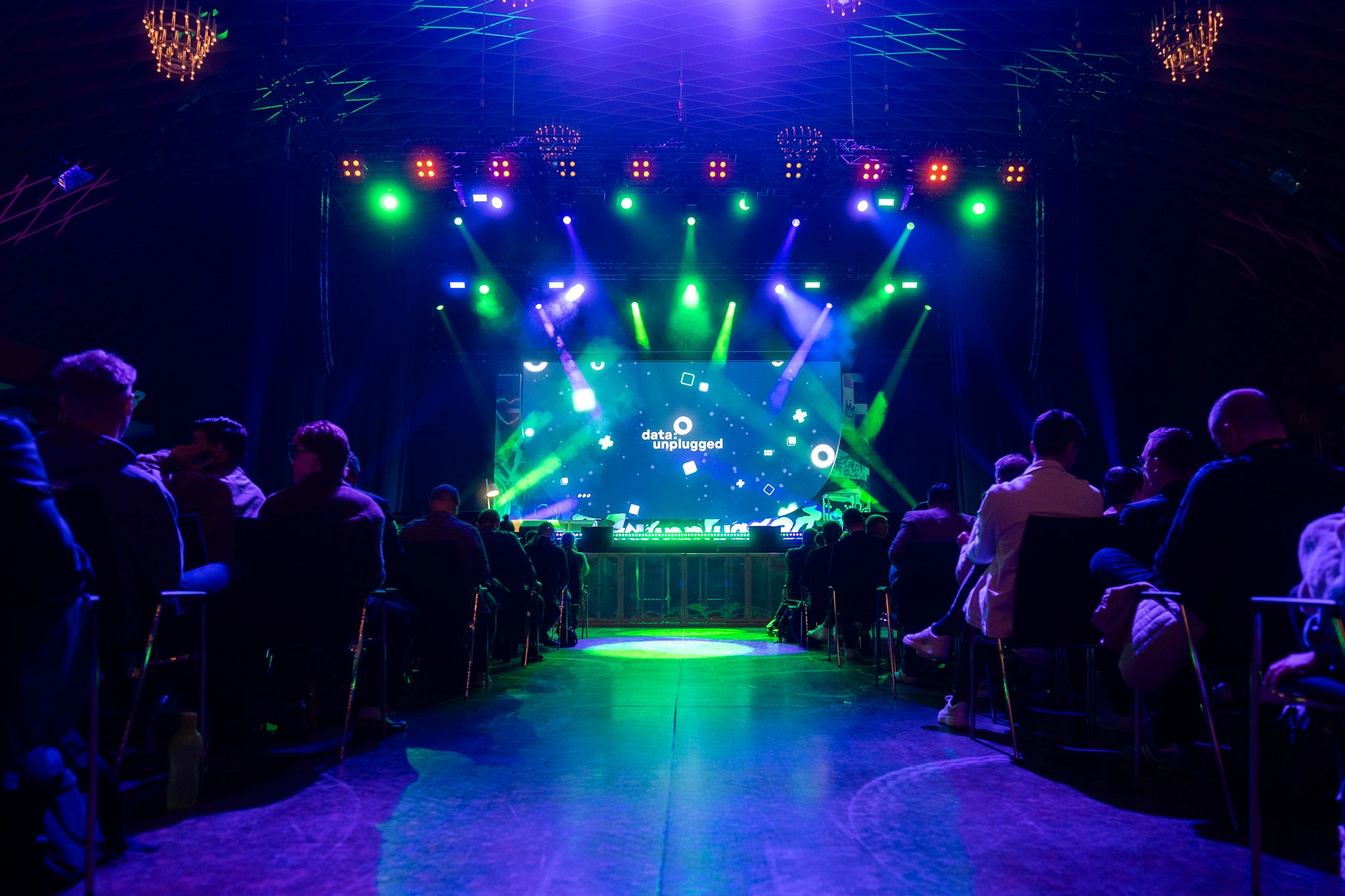
d:u27 shows how many opportunities a festival with a programme can create. On 13 and 14 April 2027, the data and AI community comes together in Münster for the fourth time. For exhibitors, d:u27 is interesting for five reasons.
An audience that makes decisions
Around 17,000 participants from SMEs, large corporations and start-ups, around 38 per cent of them decision makers. They come to find out about data and AI projects for their companies.
Conversations that start on stage
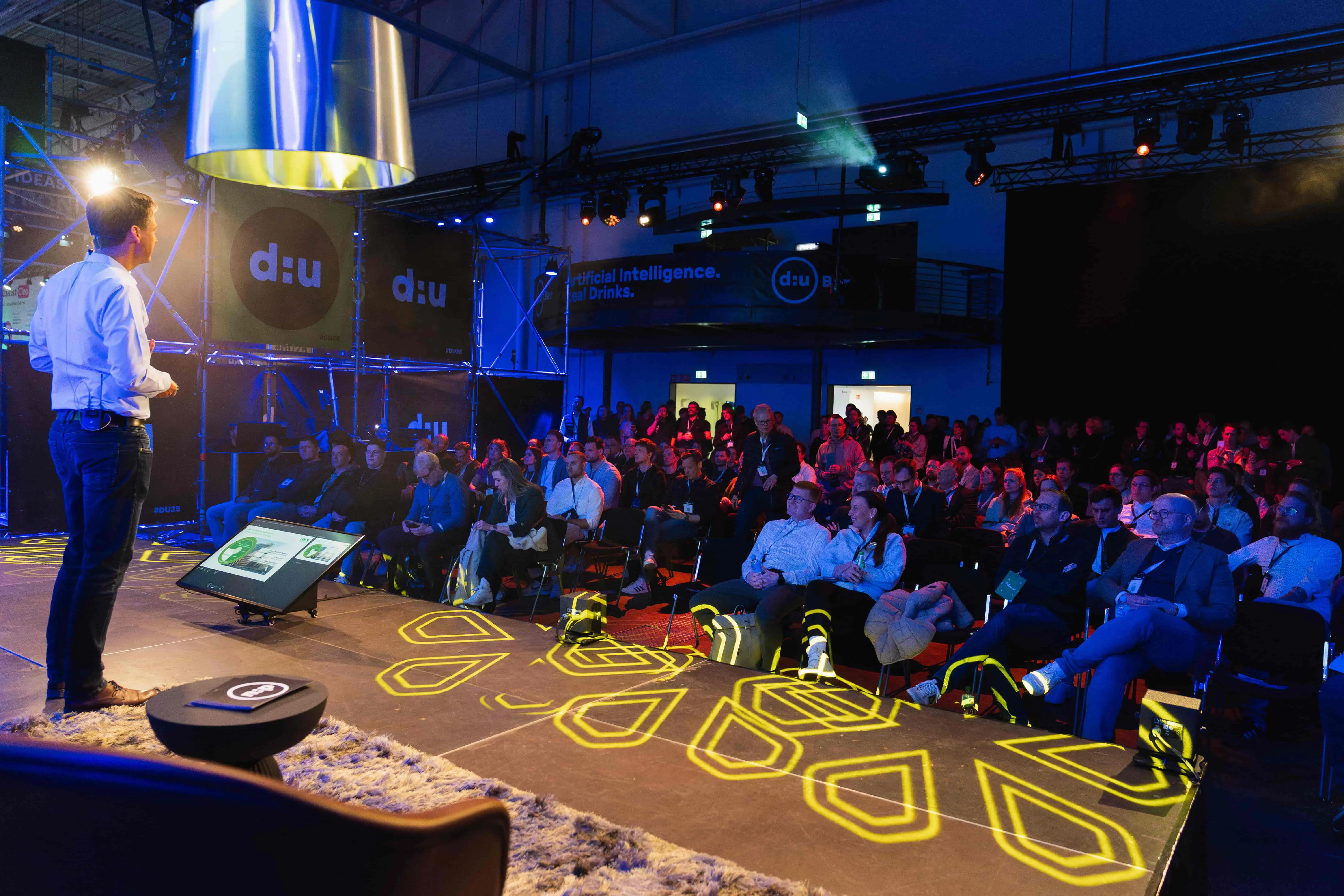
Across six stages, companies speak to audiences of up to 5,000 people. A talk about a solved problem builds trust that a stand alone rarely creates. Anyone who comes to your stand afterwards already knows your topic. What matters is the value for the audience, not a sales pitch. You can find out how it works under Speaker Slot at d:u27.
Contacts who are already interested
A Masterclass is attended only by people who have actively signed up for your topic. After 60 minutes of practical know-how, you receive the contact details of all participants. At d:u26, 4,839 participants attended the Masterclasses, with an attendance rate of 80 per cent. A Roundtable is even more targeted, with up to 25 C-level decision makers whom you invite yourself. Find out more about the Masterclass and the Roundtable at d:u27.
A turnkey stand
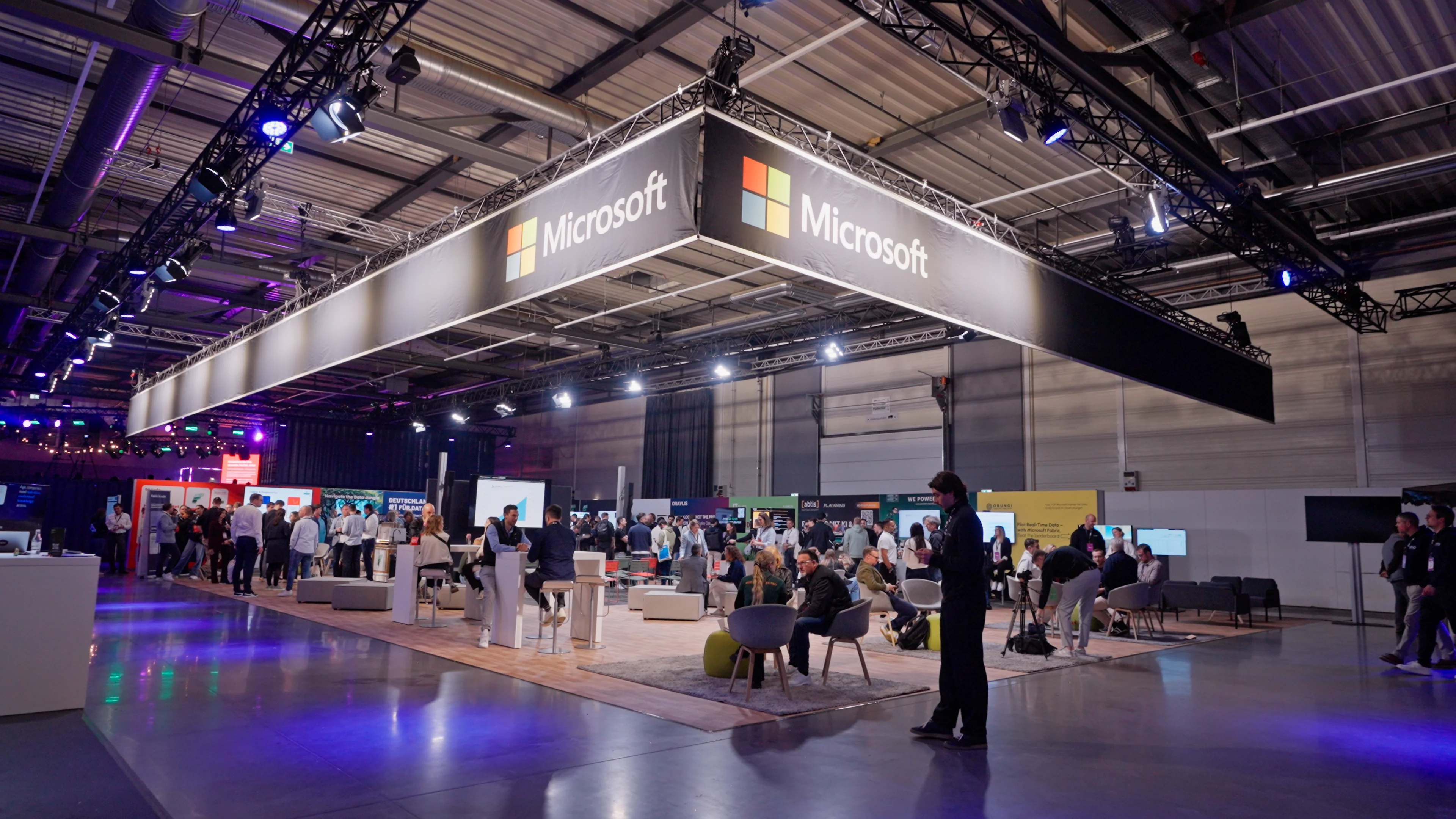
The stand packages are turnkey: stand construction, printing, set-up and a lead scanner are included, from a 4.5-square-metre start-up space to a premium presence. Instead of coordinating several service providers, your team can focus on the conversations. You will find all sizes under Exhibition stand at d:u27.
Visibility across the whole venue
From your logo on more than 20,000 festival wristbands and 60 LED screens to a Startup Area in your name, sponsorship makes your brand visible well beyond your stand. If you wish, the spaces can also be used for job ads.
Trade show checklist: planning your stand from A to Z
Whether it is d:u27 or another trade fair, the planning steps stay the same. This checklist sums them up:
- Assess the trade fair by target audience, decision-making authority, reputation, competition and costs
- Set the goal of your presence and turn it into a measurable target
- Choose a format: stand, talk, Masterclass, Roundtable or sponsorship
- Draw up and approve a budget covering all cost blocks
- Book the space, package or programme slot
- Define the stand concept, message and demos
- Decide how leads will be captured and passed on to the CRM
- Set up a communication plan and send invitations
- Arrange meetings with customers and prospects
- Brief the stand team and agree on roles and opening questions
- Check logistics, travel and accommodation
- Plan the follow-up: who gets in touch with whom, and by when?
After the show: following up on leads and measuring success
The last item on the checklist is the most important. Whether your trade show presence paid off is decided in the days after the event: Which contacts are qualified, who follows up, and how will success be measured? According to the AUMA Outlook, around ten per cent of exhibitors measure their trade show success only very roughly or not at all.
We explain how to capture, qualify and follow up on trade show leads in our article [Trade show leads: how to capture, qualify and follow up] (add link).
Conclusion
The most important decisions come before you book
Whether a trade show presence pays off is largely decided before you book. If you choose the trade fair against clear criteria, set your goal and link the budget to a target, you can work out stand size, team and timeline from there.
In our experience, combining several formats brings the most qualified contacts. If you combine a stand at d:u27 with a talk, a Masterclass or a Roundtable, you also reach people who would never have stopped at your stand alone. We are happy to discuss which format fits your goal: Enquire now about exhibiting at d:u27.
Would you like to see the festival for yourself before your first appearance? At the event, you can see for yourself whether the audience and format suit your company. Get your tickets for d:u27 now!