Contacts who already know your topic
At d:u27, a lead scanner comes with every stand package. After your Masterclass, you also receive the contact details of everyone who actively signed up for your topic.
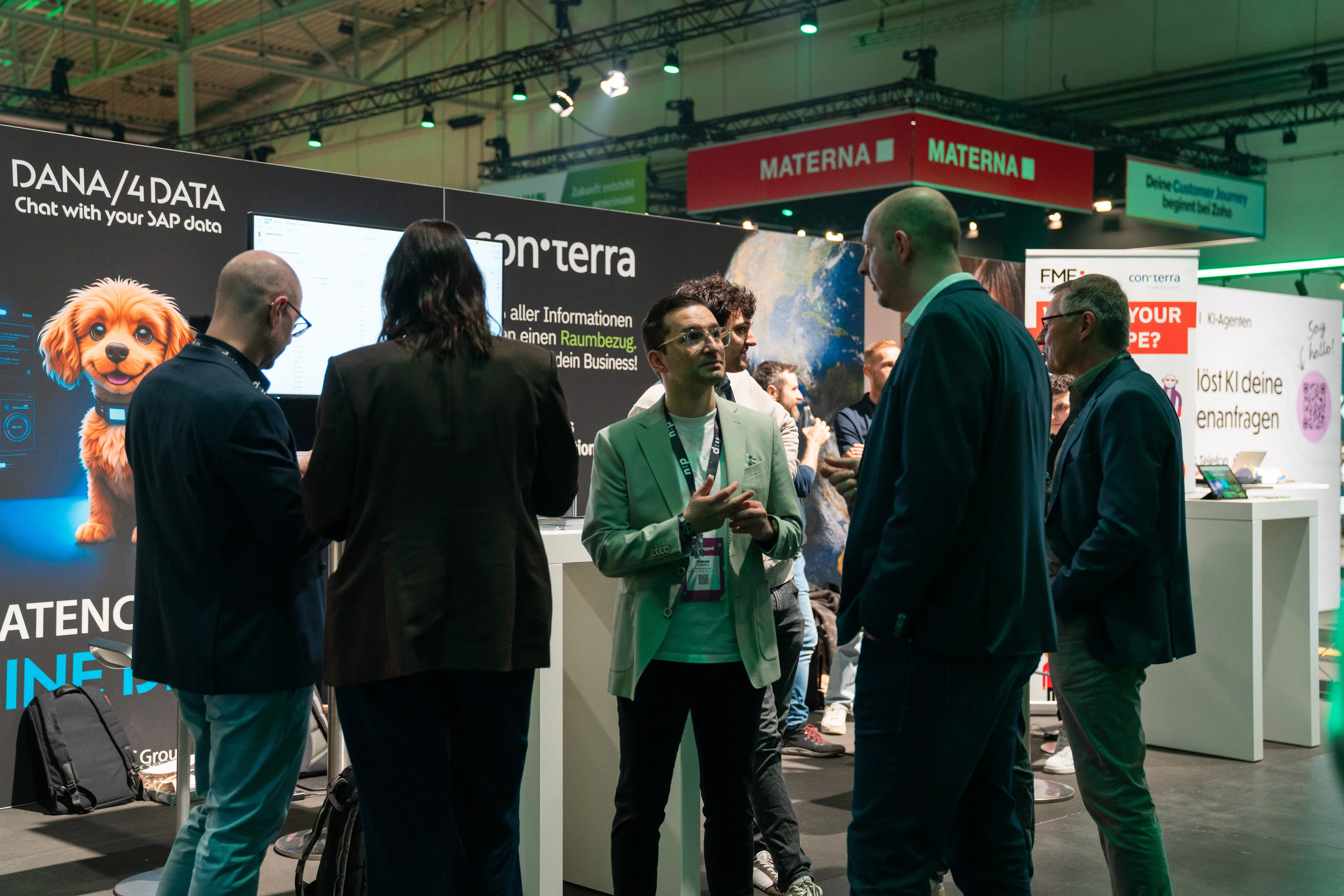
What is a trade show lead, and when is it qualified?
A trade show lead is a contact who showed interest in your offering at a trade fair and whose details you have captured. Not all of them are worth the same. Someone who picks up a pen at your stand is a contact. Someone who asks after a demo whether the solution can be integrated with their ERP system is a lead.
That is why sales teams usually distinguish between two stages. A marketing qualified lead (MQL) broadly fits the target audience and has shown interest. A sales qualified lead (SQL) has a specific need, and sales should get in touch promptly. Making this distinction at the stand saves a lot of time after the show.
Trade show lead capture: scanners instead of business cards
Business cards have one major drawback: they only contain a name and a company, but nothing about the conversation. Later on, that is exactly the most important information. Digital lead capture solves both problems. A scanner or an app reads the contact details from the visitor badge, and the stand team adds a few notes about the conversation straight afterwards.
The benefit shows after the show. The data is structured from the start, can be imported into the CRM and can go to sales the same evening. For this to work, you should decide before the show which tool you will use and how the data will get into the CRM. At some events, a scanner is already included in the stand package, for example with the exhibition stand at d:u27.
What your conversation notes should include
Good conversation notes take no more than a minute. These details should always be recorded:
- contact details and job role
- reason for and topic of the conversation
- the specific need or problem mentioned
- timeframe and role in the decision, if known
- the agreed next step
- a rating, such as hot, warm or cold
- consent to further contact
Trade show leads and GDPR: what's allowed
As soon as you capture contact details, the GDPR applies. In practice, two questions matter: may I store the data, and may I contact the person by email afterwards?
Storing the data is usually unproblematic if someone gives you their contact details during a conversation, for example to receive a quote. Marketing afterwards is more delicate. The guidance from the German data protection authorities on direct marketing (in German) states that, outside the narrow exceptions of Germany's Act Against Unfair Competition (UWG), email marketing generally requires consent. That consent must be demonstrable.
For everyday trade show practice, this means asking during the conversation whether you may send information and recording the answer in your notes. With digital capture, a field or a tick box does the job. A personal follow-up on a specifically agreed topic is something different from adding someone to your newsletter. This overview is not legal advice. If in doubt, it is worth a quick check with your company's data protection officer before the show.
How to qualify leads: clear criteria and AI
After the show, the task is to sort your contacts. Who needs a call this week, who should receive information, and who isn't a fit at all?
Setting the criteria
A widely used framework is BANT: budget, authority, need and timeline. Not all of this can be clarified in a conversation at a trade show, and it doesn't have to be. What matters is that everyone on the team uses the same criteria. Otherwise, one person rates a contact as hot while another would call them cold.
It works well to set the criteria before the show and build them into your conversation notes as fixed fields. That way, qualification already happens at the stand rather than a week later from memory.
How AI helps with prioritisation and follow-up
With a few hundred contacts, sorting them quickly becomes time-consuming. This is where AI can help. It can enrich contacts with publicly available company information, summarise conversation notes, pre-sort leads against defined criteria and draft personal follow-up emails that refer to the actual conversation.
Two things remain the team's job: the criteria used for sorting and the final check before anything is sent. For personal data, you should also only use tools your company has approved for that purpose. The topic is still new for many exhibitors. In the AUMA Exhibitor Outlook 2026/2027 (in German) from the umbrella association of the German trade fair industry, 18.1 per cent see the use of AI in trade fair processes as an area for development. Our article on AI in sales shows how AI is used in sales more broadly.
Trade show follow-up: how to get it right
Capturing and qualifying leads only pays off if the follow-up comes quickly. We recommend defining the process before the show and naming the people responsible.
The first few days after the show
Hot leads should receive a personal message within two working days that refers to the conversation. Ideally, it suggests a date for the agreed next step. Warm leads receive relevant information during the first week, such as the slides from your talk or a case study. In parallel, all the data goes into the CRM and is assigned to the right people.
Leads that aren't ready yet
Many contacts are interested but don't have a project yet. These contacts shouldn't drop off your radar. With lead nurturing, meaning regular, relevant content over weeks or months, you stay in touch until the need becomes concrete. Here, too, consent is a prerequisite.
Measuring trade show ROI: the KPIs that matter
You can only say whether a trade show paid off if it was clear beforehand what would be measured. These KPIs give a realistic picture:
- total number of leads and the share of qualified leads
- cost per lead, meaning the total cost of your presence divided by the number of leads
- number of follow-up meetings arranged
- pipeline value generated from trade show contacts
- deals closed and revenue after three, six and twelve months
The last point is the most meaningful, but also the slowest. In B2B in particular, where decisions take a long time, the value of a trade show often only becomes clear after months. It helps to tag trade show contacts permanently in your CRM. AUMA also offers guidance on monitoring success in its tips for trade fair participation.
Not every lead is worth the same: what the d:u27 formats offer you
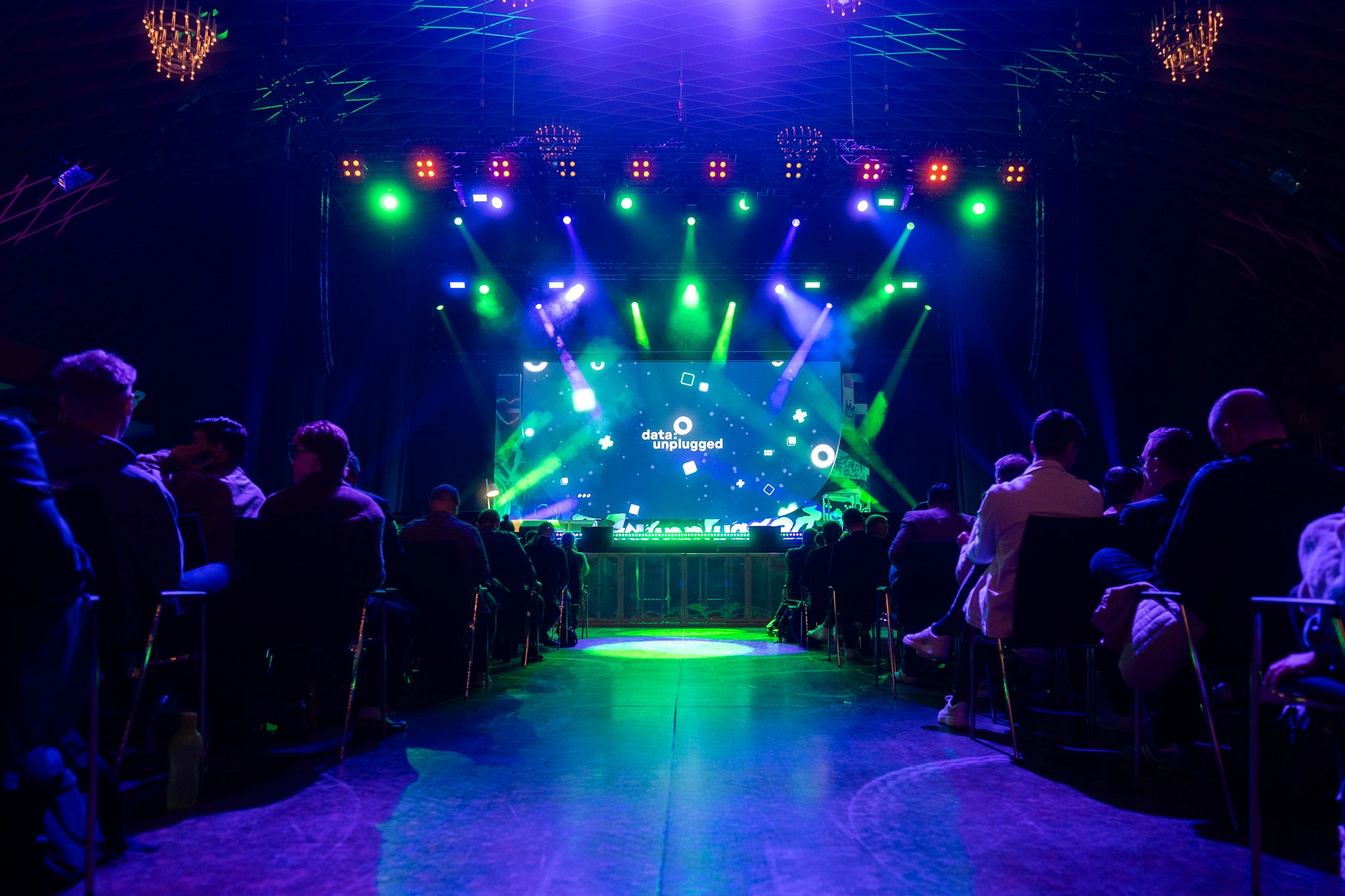
How high the share of qualified leads turns out to be depends heavily on where a contact is made. What matters is how much you know about a person before the first conversation begins. At d:u27 on 13 and 14 April 2027 in Münster, you can combine several formats that perform very differently in this respect.
At the stand, qualification starts in the conversation
People with very different intentions stop by a stand. Whether someone has a need only becomes clear in the conversation, so this is where qualification takes the most work. In return, the reach is the greatest. Besides stand construction, printing and set-up, the d:u stand packages include a lead scanner. You will find all sizes under Exhibition stand at d:u27.
After your talk, visitors already know your topic
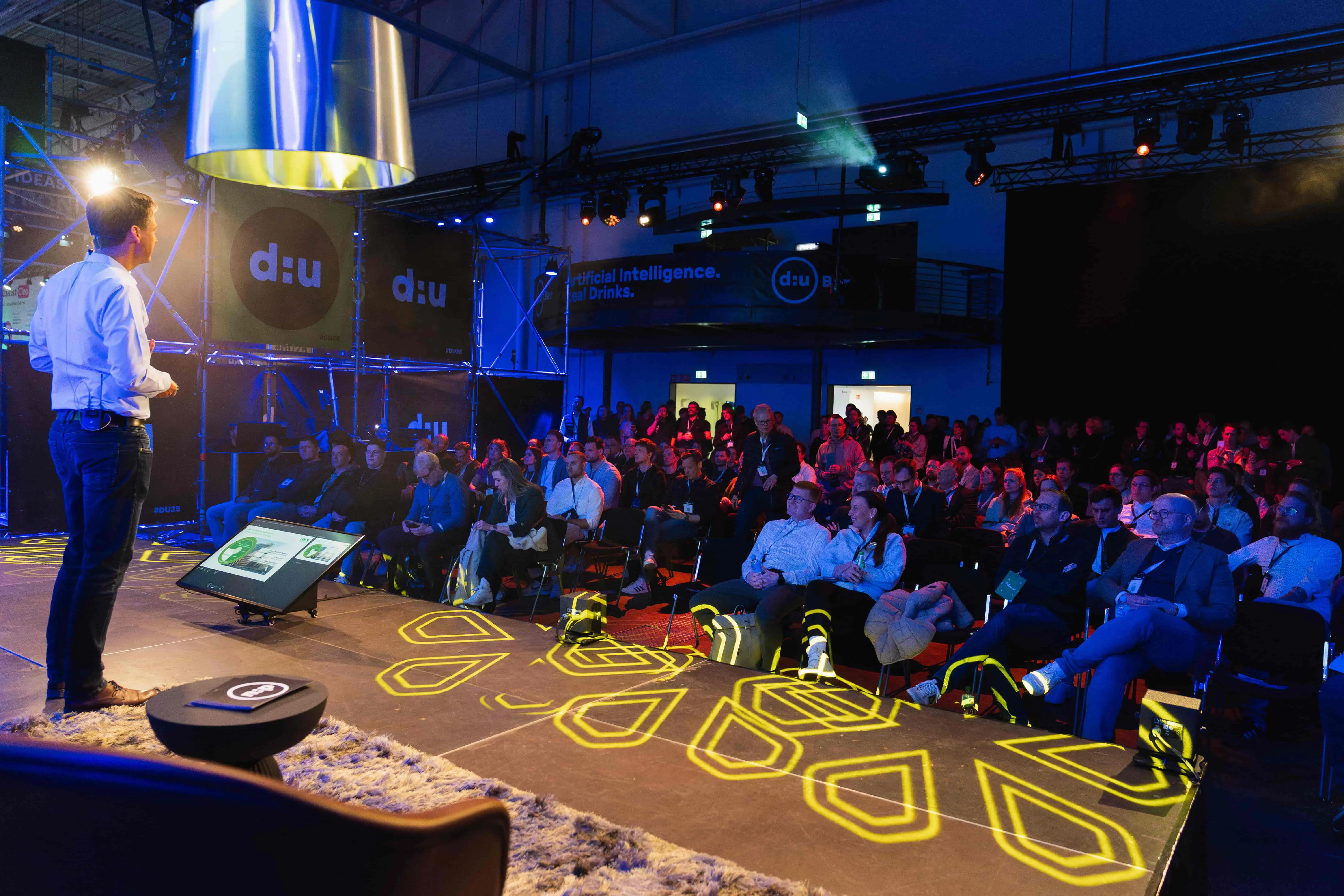
If you speak on one of the six stages, you make your topic known before the first conversation at your stand. Anyone who comes to your stand afterwards already knows your approach and often brings a specific question. All the details are under Speaker Slot at d:u27.
In a Masterclass, everyone is already interested
A Masterclass is attended only by people who have actively signed up for your topic. After 60 minutes of practical know-how, you receive the contact details of all participants. At d:u26, 4,839 participants attended the Masterclasses, with an attendance rate of 80 per cent. That gives you an immediate starting point for your follow-up, because the shared topic is already established. Here's how the Masterclass at d:u27 works.
Decision makers around one table
A Roundtable brings the most qualified contacts: up to 25 C-level participants discuss your topic for 60 minutes. You send the invitations yourself, a matching tool also shows who is interested, and the contact details of all participants are included. Find out more about the Roundtable at d:u27.
Conclusion
Conclusion: trade show success is decided in the week after
Contacts turn into pipeline when three things come together: structured lead capture at the stand, clear criteria for qualification and a follow-up that was planned before the show. AI can take a lot of the sorting off your hands, but the criteria and the personal conversation remain the team's job.
In our experience, the choice of format makes the biggest difference. If you combine a stand at d:u27 with a Masterclass or a Roundtable, you get contacts from people who have already chosen a topic. We are happy to discuss which combination fits your goals: Enquire now about exhibiting at d:u27.
You can hear first-hand how other companies use AI in sales and marketing at d:u27, for example on the SME Stage, where SMEs present their data and AI use cases, or in one of more than 80 Masterclasses. Around 17,000 participants come together across six stages with more than 350 speakers. If you want to get a feel for the event before exhibiting yourself, the best way is to come as a visitor. Get your tickets for d:u27 now!