Share article
See how other marketing teams work with AI
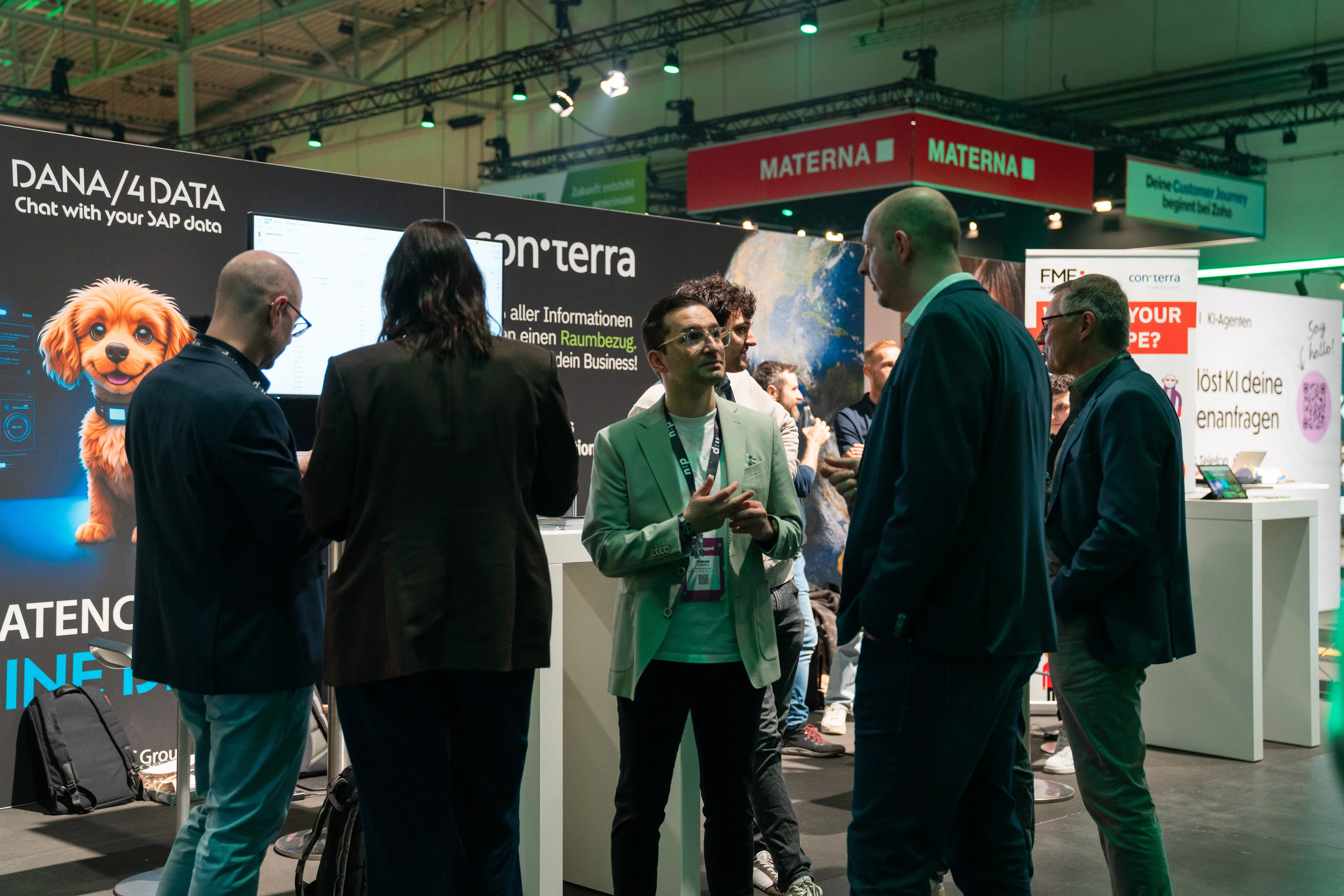
In the dedicated marketing track of the Mittelstands Village at d:u27 (April 13–14, 2027, Münster), companies share real marketing use cases. Plus 80+ masterclasses where you work on your own tasks.
The foundation
1. The project instructions
ChatGPT, Claude, Gemini and Copilot all offer projects or custom assistants with fixed instructions that apply to every chat within them. This field has more impact on quality than any single prompt, yet most teams fill it with two sentences about the company.
Prompt to copy:
ROLE
You work in the marketing team at [company], [one sentence on what we offer and to whom]. You are a sparring partner, not a yes-man.
TARGET AUDIENCES
[Two sentences per audience: role, typical situation, what worries them, how they measure success.]
HOW WE SOUND
[Five to eight specific style rules, e.g. "sentences under 20 words", "no superlatives".]
Words we never use: [list].
Examples of strong copy are in the project files under "Reference texts".
HOW YOU WORK
(1) If a task is unclear, ask up to three questions first.
(2) Use only the project files for facts about us. If something is missing there, say so instead of filling the gap.
(3) Mark every number that doesn't come from our documents with [check].
(4) Check every draft against the style rules before you share it.
(5) When I ask for your opinion, give a clear assessment, even if it contradicts me.
NEVER WITHOUT APPROVAL
Prices, commitments, statements about customers, comparisons with competitors.
The section on how the assistant works changes its behavior across every task. The "[check]" tag makes invented numbers visible before they end up in an email to a customer. All the other prompts work far better when they run inside a project like this.
Strategy and positioning
2. The interview before the brief
Prompt to copy:
I want to develop [task, e.g. a campaign for our new maintenance service]. Before you suggest anything, interview me. Ask me one question at a time, wait for my answer and follow up if it's vague. At a minimum, cover: goal and success metric, target audience and their situation, what we do differently from the competition, what has already been tried, budget and timeline. Then summarize the brief on one page and highlight the three points where my answers were weakest.
This prompt reverses the usual direction. The weak spots it highlights are often more valuable than the brief itself.
3. Brand voice from your own copy
Brand voice is the distinctive way a brand speaks: word choice, sentence structure, attitude. Instead of painstakingly describing it, you let the model derive it from copy that already works well:
Prompt to copy:
Here are eight texts we consider particularly strong: [upload]. Analyze what they have in common: sentence length, word choice, tone of address, how they handle technical terms, typical openings, what never appears. Turn this into style rules that a new copywriter could apply without asking questions, each with an example sentence from the originals. Finally, list ten words and phrases that don't sound like us.
The result doesn't belong in your next chat. It belongs in the project instructions from prompt 1.
4. Customer language from raw material
Prompt to copy:
Attached are real customer inquiries, reviews and notes from sales conversations. Create a table with these columns: the problem in the customer's own words (verbatim quote), the underlying need, the terms they use for our offering, and the terms we use that never appear in their language. Sort by frequency. Do not invent quotes.
The last column is usually the most revealing. It shows where your own language misses your customers.
5. Messages backed by evidence
Prompt to copy:
Derive three key messages from the table. Each may only contain wording that can be traced back to quotes from the material. For each message, list the supporting quotes and the target audience it works best for.
Requiring evidence prevents plausible but invented customer needs. Prompts 4 to 7 can be used as a chain, with each one building on the result of the previous one. Between steps, it's worth quickly checking whether the quotes really appear in the material, because an early mistake will otherwise carry through everything that follows.
Campaigns
6. The buying committee stress test
In B2B, a purchase is rarely decided by one person. It's decided by a buying committee: procurement, the technical side and senior management together. This prompt tests a campaign from all three perspectives:
Prompt to copy:
Here is our campaign draft: [paste]. Our customers are [industry, company size]. Evaluate it from the perspective of the head of procurement, the technical lead and the managing director, one after the other: What convinces them, what don't they care about, which objection comes up immediately, and what information is missing for the next step? Be critical, not polite. Then suggest changes, sorted by impact.
7. The pre-mortem
A pre-mortem asks why a project might have failed before it even starts. The model takes on the role of the critic, a role nobody on the team usually wants to play:
Prompt to copy:
Imagine it's three months after launch and the campaign [description, goal, channels, budget] has clearly failed. Name the six most likely reasons, each with a warning sign we could measure in the first two weeks and an action we can still take now. Separate reasons rooted in the idea from those rooted in the execution.
Both prompts bring the opposing view into the conversation. Without them, language models mostly deliver confirmation.
8. Self-assessment before revision
Most of the quality doesn't come from the first prompt but from how you respond to the first draft. Instead of saying "Make it more specific", you have the model check its work against criteria before it rewrites:
Prompt to copy:
Before revising your drafts, assess them yourself first. Criteria:
(a) Could a competitor use the same text? If so, it fails.
(b) Does the first line describe a situation the target audience knows from their everyday work?
(c) Is there a reason to respond right now?
For each draft, quote the passage that scores worst. Then write new versions that meet all three criteria.
Here's an example from a LinkedIn ad for a maintenance contract. After this round, "Maximum uptime, minimum downtime" becomes something closer to "Unplanned downtime on Line 3, and everyone's asking you why. Find out in two minutes what an outage really costs you." Good criteria from rounds like this should then go into the project instructions, so they apply to every future task.
How companies have actually built routines like these into their day-to-day work, and where they've scaled back again, is something they share first-hand on the Mittelstands Stage at d:u27.
Content and presentations
9. The content cascade from a single talk
In a content cascade, one source, such as a talk or an interview, is repurposed into several formats for different channels:
Prompt to copy:
Attached is the transcript of a [talk/webinar/interview] by [name, role]. Use it to create: a long-form article of around 1,200 words, four LinkedIn posts with one distinct idea each, a 150-word newsletter section and five key messages for the sales team. Only use statements from the transcript and mark verbatim quotes. At the end, list every passage that [name] needs to approve before publication.
Without the restriction to the transcript, the model adds its own generic statements, and the talk loses exactly what made it special.
10. The deck brief
With tools like Claude Design or agent mode in ChatGPT, a deck is no longer built slide by slide. You describe the goal, audience and key message, upload your documents and then comment on the draft, much like a manager reviewing a team member's work. How good the result is depends on the brief:
Prompt to copy:
I need a presentation for [occasion], 15 minutes, audience: [who they are, what they already know, what matters to them]. Goal: by the end, [specific decision] should be made. Material: [upload]. Before you design any slides, propose the storyline: one line per slide with the key message as a full sentence. Ten slides maximum. Only build the draft once I've approved the storyline. Use numbers only if they're sourced from the material.
Approving the storyline saves the most time. After that, the work happens through comments like "Slide 4 is too crowded, split the message across two slides."
Research and reporting
11. Competitor analysis with Deep Research
Deep Research is a feature in ChatGPT and Gemini. In Claude, it's simply called Research. The model independently searches many sources and turns them into a report with citations. It takes a few minutes, but it saves a lot of manual work on market questions:
Prompt to copy:
Research how [competitors A, B, C] position themselves in the [country] market for [offering]. Use websites, press releases, job postings and trade press from the last twelve months. Output: a table with target audience, core promise, pricing signals, current focus areas and visible gaps. Back up every statement with a link and separate what's documented from your own interpretation. If you can't find anything reliable, say so instead of estimating.
Job postings are the underrated source here. They often reveal where a competitor is investing earlier than any press release.
12. The monthly report with hypotheses
Prompt to copy:
Attached is our export from [tool] for [period] compared with the previous month. Analyze the data and show your calculations. Give me the five most notable changes with figures, two possible explanations for each, and the check that would tell us which one is right. Then write a five-sentence summary for senior management, starting with the decision that follows from it. Flag any missing values or breaks in the time series.
A model knows nothing about one-off effects or last month's tracking change. That's why the prompt asks for hypotheses rather than answers. And even this way, messy data won't turn into a reliable analysis.
How marketing teams deal with this problem in practice is shown in use cases from the dedicated marketing track in the Mittelstands Village at d:u27, where experts also present their concrete solutions.
Agents and visibility
13. The agent for a weekly topic radar
An agent is an AI assistant that doesn't just answer a task but completes it on its own in several steps: researching, reading files, saving results.
The major providers have expanded their assistants so they can use connectors, meaning authorized links to other applications, to access storage like Google Drive or SharePoint and team chats, research independently and repeat tasks on a schedule.
In ChatGPT, shared agents like these are currently available as a preview in the Business and Enterprise plans, and Claude and Microsoft Copilot offer similar features. That turns the prompt into something like a job description:
Prompt to copy:
ASSIGNMENT
Every Monday at 8 a.m., you create a market and topic radar for the marketing team.
SOURCES
(1) Web search: news from the last seven days on [competitors A, B, C] and [two to three industry topics], including new job postings.
(2) Folder [name]: last week's radar, so you don't repeat anything.
OUTPUT
One page maximum. For each entry: what happened, link, why it matters to us, and an assessment of "monitor" or "act". End with one content topic suggestion. Save the radar in the folder and send a three-sentence summary to [channel].
LIMITS
Read-only access except for this folder. No messages to anyone outside the team. If a source can't be reached, note that instead of replacing it.
The section on limits is not a minor detail. An agent that can read file storage and send messages needs the same clear permissions as a new hire. Which data can go into which tool is something we cover in our article on AI, data protection and the GDPR.
14. The self-test for AI answers
Prompt to copy:
I'm [target audience, e.g. head of production at a 300-employee machine manufacturer] looking for [solution] in [region]. Research current providers and recommend three. Justify each recommendation and name the sources you're relying on. Then answer: What do you know about [our company], where does that information come from, and what's missing for you to recommend us?
More and more buying decisions start with a question to an AI assistant. Running this test regularly with five to ten typical questions shows you which content is missing. It's rarely promotional copy. Usually, it's specific, verifiable statements.
Conclusion
From prompts to ways of working
These 14 prompts have one thing in common: they treat AI not as a text machine but as a team member who needs context, material, criteria and the freedom to disagree. They deliver their full value when they don't disappear into individual chat histories but become part of projects, templates and established workflows. How to turn this into a lasting system is something we describe in Working with AI: from prompt to work system.
For leaders, this means the biggest lever isn't writing prompts yourself. It's making sure the team maintains shared project instructions, shares good prompts and gets the time to test and refine them.
A Bitkom survey of 180 companies (in German) shows that this is exactly where the gap lies. 51 percent say generative AI already handles a significant share of creative marketing work. At the same time, 52 percent report that marketing departments often lack the skills to use AI effectively.
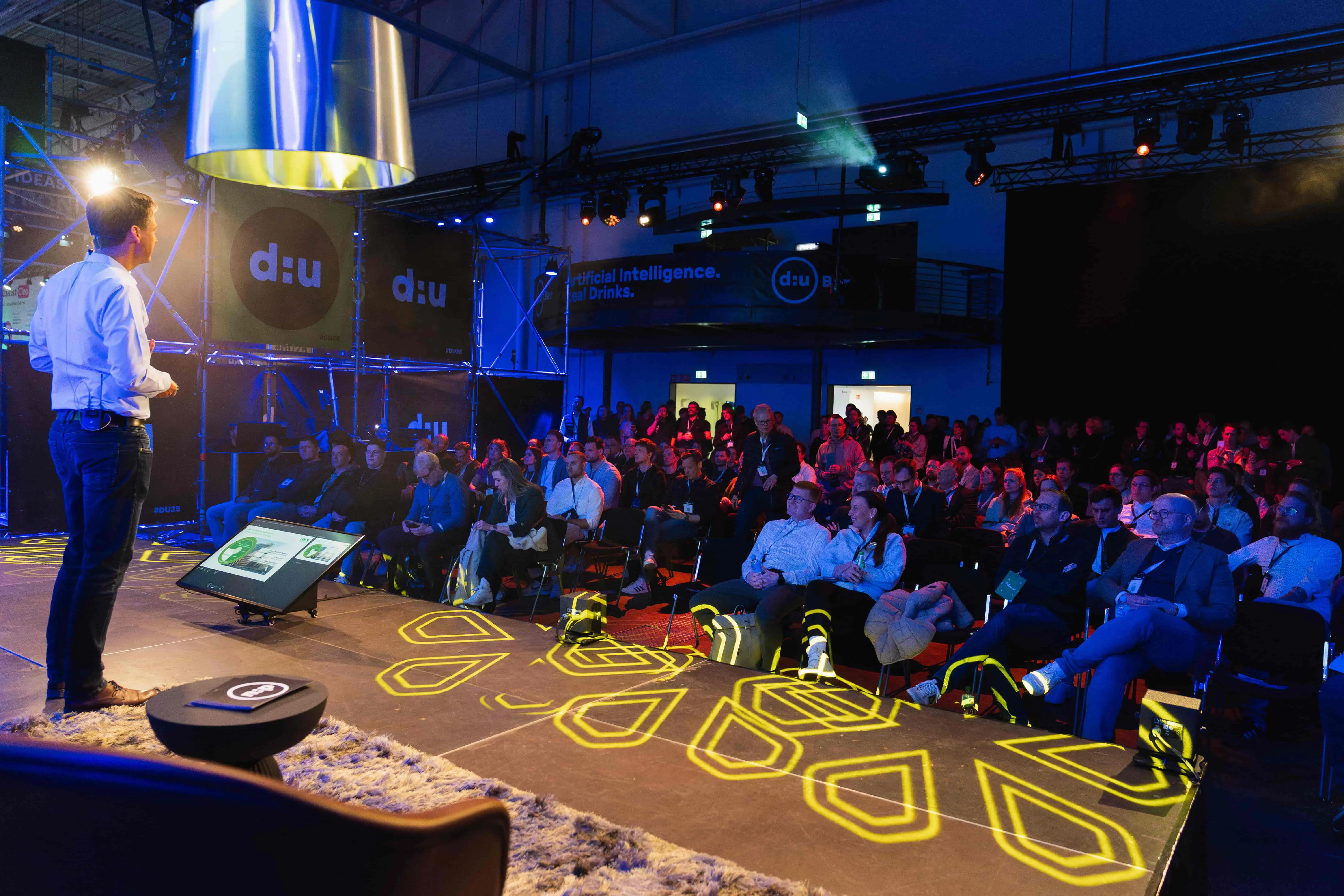
This step is exactly what the data:unplugged Festival on April 13 and 14, 2027 in Münster is about. Across six stages, more than 80 masterclasses and over 350 speakers, companies show how their teams work with AI today. The Mittelstands Stage focuses on real-world learning curves, the Data Stage on the foundation behind them, and the masterclasses on applying, learning and implementing. Between sessions, there's room to connect with other companies working through the same questions as you.